
Wellbeing at Opus: building an ecosystem of care in a systems change organisation
Organisations in the business of radical change necessarily come into contact with harmful systems every day – whether that’s neoliberalism, patriarchy, deep-rooted racism, or a combination of all three. Those doing work that intervenes in these areas and seeks to overturn the status quo are therefore particularly susceptible to harm from those very systems. Wellbeing isn’t an optional extra at an organisation like Opus – it’s a core part of the work.
As the company has grown from small beginnings to a staff of 26 (and counting), our approach to wellbeing has evolved and become more sophisticated, transitioning from fairly ad-hoc arrangements into a holistic and distributed model of care. In the hope that we can share learning with like-minded organisations, I spoke to wellbeing support coordinator Ben Jackson about how we care for each other, and why wellbeing is more than a nice-to-have.
Could you tell us a little bit about the philosophy behind wellbeing at Opus?
I think when talking about wellbeing at Opus, we have to immediately name the potential tensions and opportunities when reconciling individual and organisational wellbeing. The base principles here are that every person has to have their own individual agency, they have to have support tailored to their specific needs and characteristics, and that we operate a collaborative approach to building that care.
That does have to be balanced with care for the organisation as a whole. We've not traditionally operated a standardised HR model at Opus, but as the team has grown the overall model of care provision has necessarily shifted to accommodate that. But the confluence between individual and organisational wellbeing has always been at the centre of it. That’s not necessarily to say it's in conflict, but it's a consideration I have to hold.
It's interesting because I don't think most organisations would use that framing of ‘organisational wellbeing’ – they would talk about staff wellbeing as something possibly in opposition to the need to make money.
In my experience of traditional or legacy organisational structures, wellbeing can be seen primarily as a prerequisite to ensure that you have productive and contributory drones. Whereas with Opus being a portfolio organisation, which aims to be greater than the sum of its parts, there has to be a joined-up methodology for how we're looking after each other and for the whole.
How has our approach to wellbeing changed over time?
When there were fewer of us - under ten team members - wellbeing and care provision conducted on an individual basis was quite manageable, if not perfect, and I was the fulcrum of that. But fortuitously, as our numbers have increased and the diversity of the people that have joined has increased, it's given us the impetus to evolve with that – to develop more suitable frameworks for how care is conceived of, delivered and supported.
I’m a straight, white, cisgender man of a certain age, and broadly speaking that used to be a fairly large proportion of our [workplace] demographic. For those that didn't fall into that category, I had a long and lasting relationship with them that enabled a very personal approach. But it became increasingly apparent that that wasn't a model that was fit for purpose - for myself as well as for the wider team.
We also identified the need for a more formalised agreement for the shape of our wellbeing model, which took the form of our Wellbeing Strategy Framework document, expertly pulled together by James Lock following several conversations with me regarding what we were actively doing at the time of its inception, and what our organisational aspirations were to take it forward together as a team.
What other organisations, or what other practices, have inspired the approach here at Opus?
From day one, the wellbeing strategy framework at Opus has been, let’s say, ‘derivative’, and inspired by a smorgasbord of policies and practices that I personally researched and thought sounded useful, coupled together with the absolute necessities. The goal has always been that we don't ever want to come in at entry level. We use that as a base, but we always aspire to go above and beyond that. There was one particular article that really jumped out by the organisation MAIA [now Hood Futures Studio]. That was actually co-authored by a current member of our team, Laura, and serendipitously I'd read, researched, and started to implement a lot of its ideas before Laura actually joined us.
That gave me some useful insight into what was actually workable from that list of aspirational policies and practices, and I'm happy to say that of the three distinct policies that we did co-opt and adapt from that article, all are still in place and all are still working well.
The essence of all of this of course is that it's iterative, it's ‘test and see’. But the underpinning ethos was to move away from a centralised ‘wellbeing officer’ model to a more decentralised and distributed ‘ecosystem of care’ model, which I am steward of, along with the wonderful Abz Dickinson, who occupies a supporting coordination role in the wellbeing space with me.
It might seem like a semantic shift, but I changed my role from ‘wellbeing officer’ to ‘wellbeing support coordinator’. I operate as a yardstick - someone that makes sure contributions are heard, amalgamated, and implemented. It's very deliberately a service role without some of the officiousness that used to go with a title like ‘officer’.
Some of the things we found really instrumental in realising that distributed care model has been the creation of Care Pods. Before, we just had the standard quarterly one-to-one optional check-ins directly with me - which we do still have in play - but the evolution of that model has now meant we have a designated convener for each of the Care Pods, and there are usually between three and five people in each pod.
The job of the convener is largely an administrative role, really. We all ensure the pods are meeting regularly and that there are activities for people to do, which are all done on a consensus basis - everyone has the opportunity to suggest things to do. We decided that to make this work in a meaningful way, it needed to be resourced. So we make sure each pod has an annual budget, to facilitate meetings, so they can have refreshments, so they can buy entry tickets to art galleries, etc. The conveners manage the individual Care Pod budgets.
Do you have any favourite activities that the Care Pods have got up to?
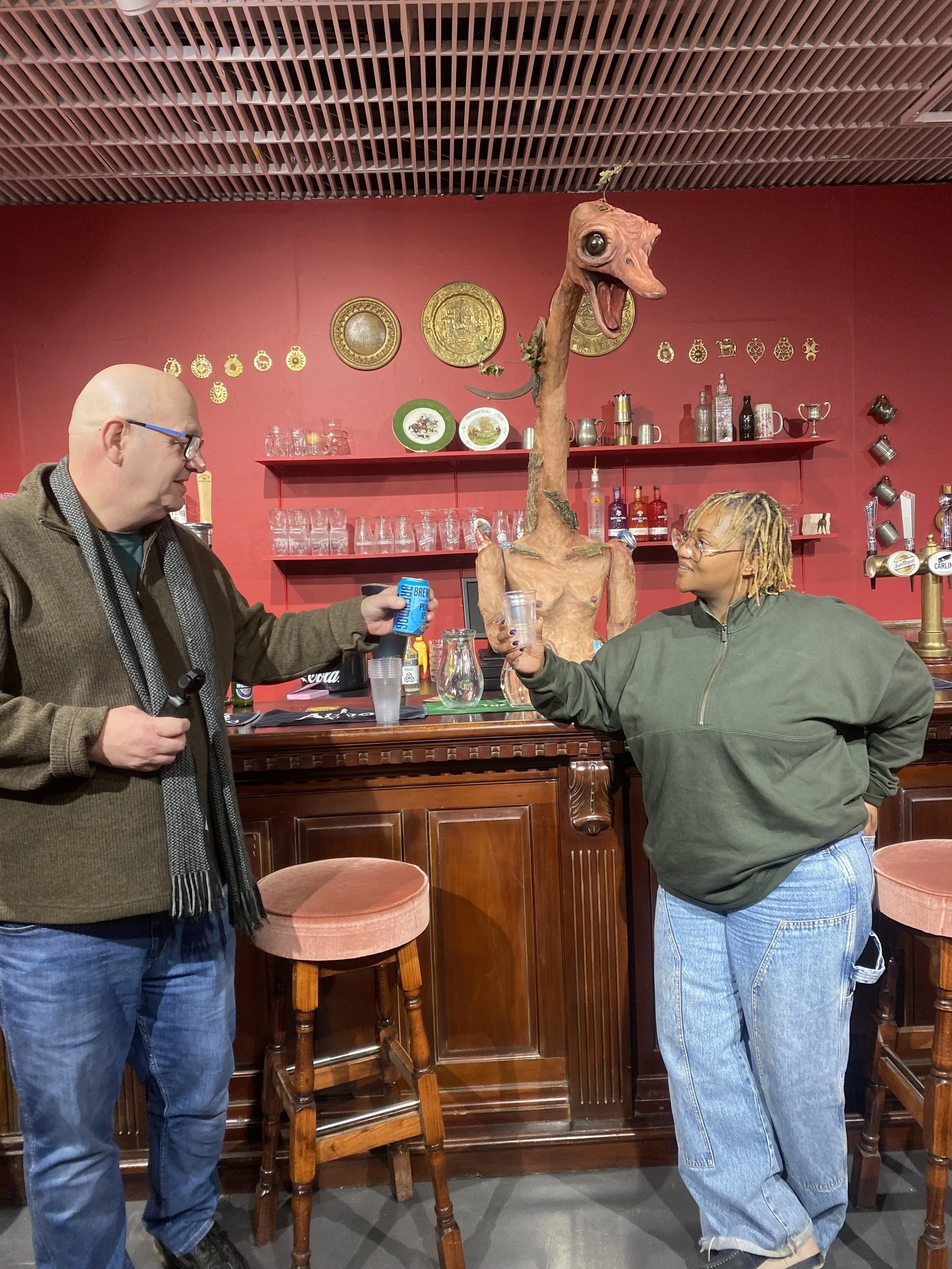
Yeah, a few great examples of activities Care Pods have done together are trips to the Yorkshire Sculpture Park, a foraging workshop event, right through to meals at a place that sells cuisine from around the world, where members of the team recommended each other dishes, so that you get an idea as to what they like from their culture, right down to bar games like pool tournaments and axe throwing. The idea is that everyone has the opportunity to put ideas forward collectively, and you jointly decide on what you're going to do. Because we aim to meet monthly, there's an opportunity for everybody's personal desires to be met at some point.
Speaking of what we’ve plundered from the aforementioned MAIA piece, it might also be worth talking about what they call the ‘Manual of Me’. I first launched our version of that as the Preferences Passport, which enabled every individual in the team to answer as concisely or comprehensively as they liked a set of open questions which talked about how people best show up for work, times of day they're most active or not, and ways of working - which could account for anything from personal preference right through to neurodivergence, or even specific disabilities. But it felt a little bit held together with cobwebs and good intentions, and in need of some tightening up to make it as effective as possible.
So I enlisted the services of an external consultant, Catherine Palmer-Skillings, who might as well have arrived on a cloud playing a harp. Because she took all of the documents that I'd made and first of all made them legally compliant, and then secondly helped me make a clear delineation between what people prefer and what people require. They became the Requirements and Preferences Passports. We’re trying to cultivate a culture where people can self-advocate, make their own needs known and be properly supported in the implementation of practices designed to support those needs.
That can be quite difficult to do – if you feel, even subconsciously, that it’s going to be perceived as unnecessary or whatever. When actually, if you need a standing desk, you need a standing desk!
What Catherine enabled me to do was create a framework of language that invited people to say, ‘I am better when these conditions are in place’. And of course what that does, circling back to the top of this, is reconcile an individual need with an organisational threshold of tolerance. But what we strive to do is to put those individual preferences and, obviously, requirements first and work out how the organisation can change shape to accommodate them. Because the shape of the organisation is dictated by its constituent people. It's a perpetual learning curve, but it's going well.
Back on the resourcing tip, I thought that everybody having an individual wellbeing bursary would be a nice idea. We immediately ran into the practicalities of that being a taxable benefit, so whatever we give has to have deductions taken from it. So we had to aim a little bit higher with that. My first instinct as well, I have to confess, was a slightly paternalistic one: telling people what was on the menu of things they could draw down their budget for. But I didn't concoct that ‘menu’ myself - I did a company-wide R&D session where I put together a wellbeing wishlist and asked every member of the organisation what they thought they might like to use an individual wellbeing budget for. Ultimately it was edifying but not practically applicable, because there was such a huge variation in what people were writing down, with everything from hearing aids to Italian lessons cropping up.
What that taught me was we could give people guidance but ultimately it had to be absolutely up to them what they spent their personal wellbeing budget on. Because of course it also accounts for if somebody is in a tricky period and they just need a bit of money, no questions asked - it can absolutely do that. Because the core aim is that people be well. That's what it all needs to mean. To put that unconditional marker on there, I think, is foundational to its efficacy.
At what crossroads do we find ourselves when it comes to wellbeing at Opus?
The more people you have, the more diversity of lived experiences, personal core values and identities you have. And as with any organisation of nearly 30 people, we've encountered some clashes. The crossroads, I suppose, is ‘how do we relate well in service to the work?’ What I think we need to be really conscious of is that we do have a universally agreed-upon Opus mission, and that the wellbeing framework is at least as much in service to that as to people's individual needs. So the crossroads I am constantly at is trying to square that circle.
What is the best thing that could happen?
I've always been intrigued by this framing, because it invites a utopianist, unicorns and rainbows response in me. Which I think there's a place for - if you're not hopeful, what are you doing? I think I would repurpose that question to ask: what is good enough to try, and are we trying it?
I can honestly put my hand on my heart and say yes - it’s good enough to try. We’re trying it, and broadly speaking it's going well across the wider team, and whilst there are some quite acute relational issues to be worked out in isolated areas, we’re working through those issues collaboratively together.
With the process being ongoing and iterative, we are constantly evaluating - softly rather than officially - and making improvements as things come along. A very live example of this is that, while the distributed model has certainly given more license and space for people to engage cross-team, there continues to be a number of circumstances that have bottlenecked around me. As a result, I've come close to personal burnout a few times. But we've taken counter-measures for that as well. I now have a clinical supervisor for the first time ever in nine years of doing this work, who has resourced me properly.
Could you just clarify what a clinical supervisor is?
A clinical supervisor is for anybody who is in a therapeutic role, whether that is someone who is officially offering therapy - a registered counsellor, a psychologist - right through to people who are doing it on a professional level but in a far more unofficial way. A clinical supervisor is someone that can be their touchstone, their sounding board, and what my clinical supervisor does really well is allow me an outlet, and to cultivate an internal sense of being a conduit rather than a receptacle for a whole litany of different experiences that I'm absorbing pretty much daily. But also questioning how and why I'm wedded to particular narratives that I present to them, and really unpicking that. The sense of liberation that I've gleaned from those interactions has been priceless. I genuinely feel like it's not diminishing my capacity to do the work, whilst at the same time definitely diminishing the potential lasting impact that it has on me.
I don't think anyone holds that question of ‘what is enough?’ with sufficient care. Enough has to be the target, because as the old adage goes, perfect is the enemy of good, and we don't get anywhere until we try things, as long as they’re tried in a safe, contained way, evaluated carefully and adapted accordingly.
How does being a worker-owned and worker-controlled company influence how we approach wellbeing?
That’s a really good question. It's perhaps because of that that we're not so hampered in what we're able to do. We all have equal shares in the company, equal rights. We all have our own say, we can all vote. I think that is the fertile soil that allows ideas like a collaborative care process to even be conceivable.
For the overwhelming most part, the whole infrastructure of care at Opus has been collaboratively curated. I would posit personally that this can only happen in an organisation that operates with a flat structure founded on equality and equity.
Care within an organisation with the aspirations and outputs that we have has to be a scalable microcosm for how we collectively care for each other as a community, on any scale from hyper-local to global. It’s no accident that when you’re in a ‘change for good’ organisation, that exists for the common good, you have to start within your sphere of direct influence - and then model it outwards.