

We recently heard the exciting news that Sheffield has been shortlisted to become the UK’s next City of Culture in 2029, and here at Opus, we were proud to work on our bid as Lead Engagement Partner. What we learned didn’t just go into the bid – it helps us understand what people value about Sheffield, the experiences that create meaning and belonging, and the wider opportunities culture can create for the city.
In this series, we’re sharing seven ‘signals’ from the full engagement report that we heard loud and clear, giving us a snapshot of our city’s culture sector and where people would like to see it grow and develop in future. Last week, we looked at how we can celebrate what makes Sheffield different. This week, we’re looking at how culture in our city can span from the grassroots to the global.
You said…
If Sheffield was celebrating itself in 2029, what would you most like the rest of the UK to see or know about us?
“A proud heritage but also a city that has evolved and developed over my lifetime. It is vibrant, it feels safe, it has a heart”
“We are a city of makers and creatives, with so many different opportunities for people to get involved. We don't just participate in culture - we make it”
“We are home to one of the most culturally significant independent publishers in the UK: And Other Stories”
“I would like to see Sheffield finally shout a lot louder about its filmmaking legacy and pedigree. There are a lot of films made in Sheffield and more are coming”
“That we are a city of incredible individuals who come together to form a powerful community”
“A city with a long history, that sets high standards for caring for its people. A city with a lot of variety - mainstream and non-mainstream”
“Classical Sheffield and how unique it is, with over 70 member organisations or individuals, the way it has proactively encouraged collaborative events that enrich the city, and the amazing three-day festival of classical music it organises every two years”
“In 2029 I would like to see Sheffield celebrating its musicians, their prowess in music-making and the UNESCO designation of Sheffield as a ‘City of Music’”
“That the city is nestled in beautiful green open countryside, so many trees and open spaces with magnificent views at every turn”
“That we are a community of makers who can do lots with very little”
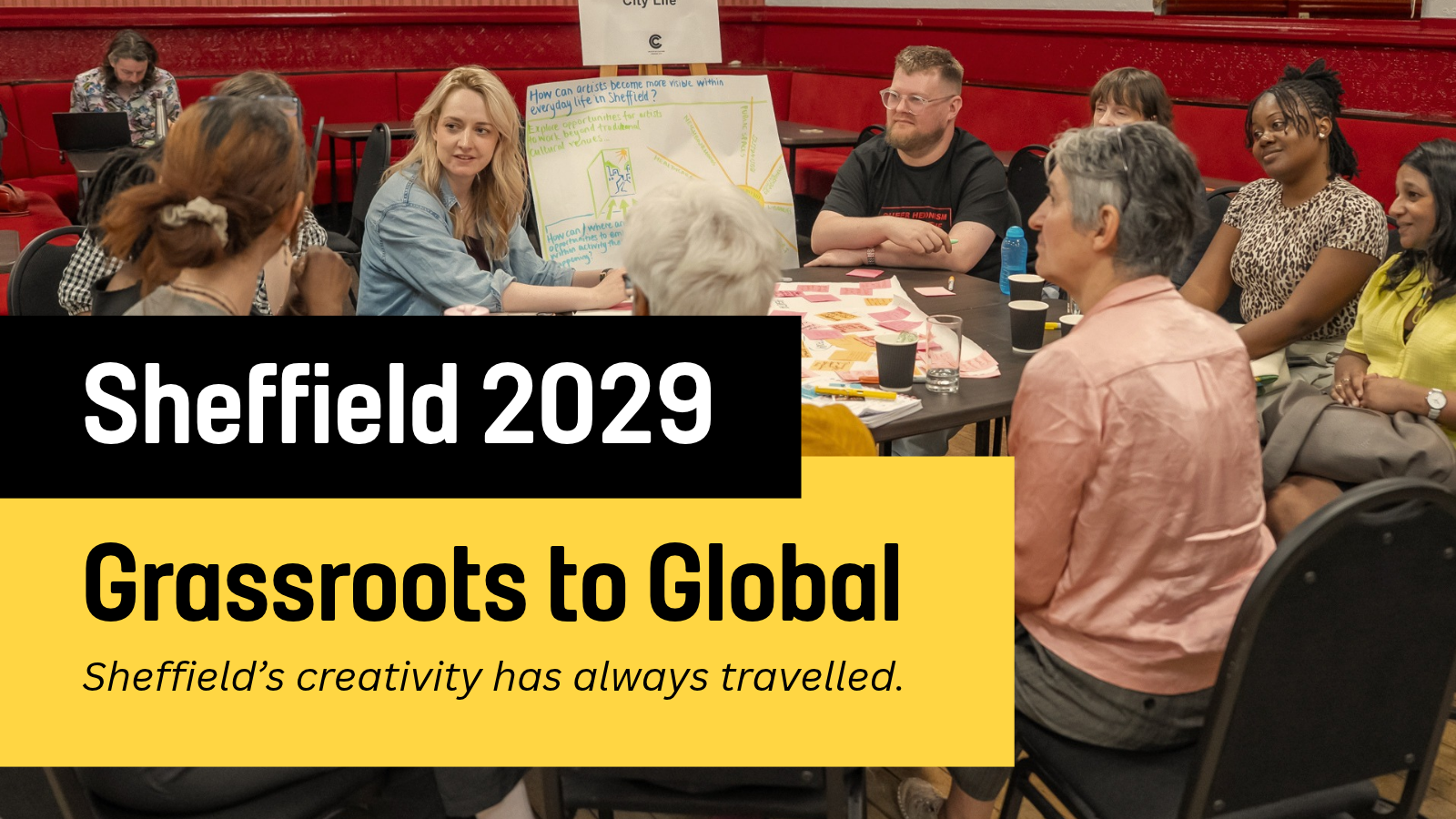
Grassroots to Global
Sheffield's creativity has always travelled.
Sheffield has a distinctive place in the UK's cultural story. Its music, artists, makers and independent cultural scenes have influenced people far beyond the city, often emerging from grassroots spaces, informal networks, and communities creating opportunities for themselves. Its post-punk heritage and globally influential electronic music scene began in bedrooms and warehouses. Britain’s bus stops, traffic lights, and street furniture reflect the city’s ingenuity through the influence and design of David Mellor. Our theatre productions are shown on Broadway and the West End. Work created by the city’s visual artists in studios and transformed industrial workshops represents the UK at the Venice Biennale. A strong folk music tradition still resides in our pubs and social clubs. Global gaming icons are made in formerly industrial streets, and our homegrown festival circuit includes some of the UK’s biggest festivals of their types – across podcasting, politics, migration, literature, music and much more.
Across the engagement, people repeatedly expressed pride in Sheffield’s independent and friendly spirit. Sheffield was described through its creativity, originality, resourcefulness and willingness to do things differently.
The public survey highlighted the importance of Sheffield's musical heritage, independent venues, festivals, local artists and creative communities. Respondents also celebrated the city's industrial and working histories, its radical traditions and the many cultural influences brought by people who have made Sheffield their home. Grassroots venues and the festival circuit were highlighted in particular as areas where investment from a City of Culture programme could have a big impact.
Together, all these stories describe a city whose cultural identity is both deeply local and internationally connected.
Sheffield's independent spirit is one of its greatest cultural strengths. Participants valued the city's grassroots organisations, informal creative networks, artists and independent venues. These are not simply a supporting part of Sheffield's cultural life; they help define its character.
The city has stories worth sharing with the world. Sheffield's contribution to music, making, cultural innovation, social change and environmental activism provides a powerful foundation. People expressed enthusiasm for telling familiar stories in new ways, and bringing overlooked histories and communities into greater visibility.
Cultural ambition should grow from local identity. The public survey demonstrated a wide-spread enthusiasm for major events and international artists, alongside a clear desire for experiences that feel genuinely rooted in Sheffield.
Sheffield's cultural diversity is central to its identity. Respondents described the importance of recognising the traditions, stories and contributions of communities from across the city. They imagined cultural celebrations that create opportunities for exchange, discovery and shared pride.
“Not big glitzy expensive events but authentic high quality inclusive events which celebrate diverse cultures and nature.”
Public survey respondent, July 2026
The engagement suggests an ambition for Sheffield to become more confident in recognising and celebrating its own creativity. The bid reflected this by ensuring programming valued grassroots culture alongside major institutions, recognising the city's diverse histories and contemporary communities, and creating opportunities for local artistic excellence to connect with wider audiences. Sheffield 2029 would bring Sheffield to the world, and the world to Sheffield.
Sheffield's cultural future can be ambitious and internationally relevant precisely because it grows from the distinctive people, places and creative traditions that make the city what it is.
Next week, we’ll look at how we can create a city where creativity can flourish. You can read the full engagement report now.