

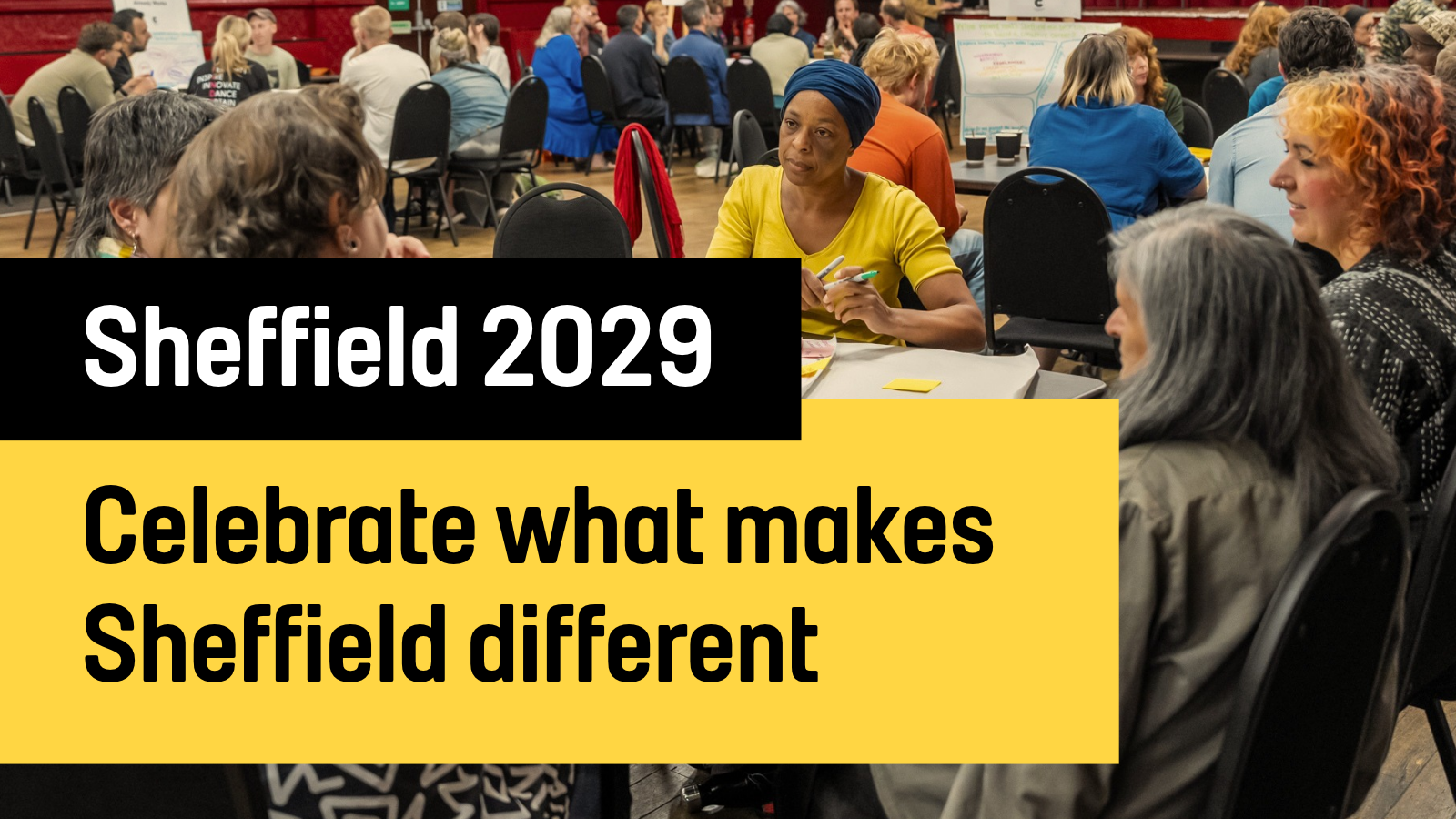
Last week, we heard the exciting news that Sheffield has been shortlisted to become the UK’s next City of Culture in 2029.
Here at Opus, we were proud to work on our bid as Lead Engagement Partner. We spoke with hundreds of artists, institutions, creatives and practitioners across the city to find out what’s working, what’s not, and what they wanted to see from our year as City of Culture.
As Sheffield developed its bid to become City of Culture this summer, we invited people to reflect on what culture means to them, what makes Sheffield special and what they would like its cultural future to look like.
We welcomed 440 participants to our five Creative Assemblies, carried out 30 one-to-one interviews, engaged more than 300 young people directly, hosted 18 conversations through community groups and networks, and received more than 600 public survey responses.
You said…
What makes Sheffield special?
“It is a resilient city which after difficult times now seems to be on the up”
“Sheffield isn't 'polished' like London, Leeds or Manchester – Sheffield has to graft so hard to be seen”
“It's the sum of its individual parts which makes it so special”
“Not too big, not too small, friendliest people in the country”
“I came here as a student over 50 years ago and never left because of the friendliness of the people”
“It's unpretentiousness – it's about people and who they are – we can be ordinary here and that's celebrated”
“It keeps its feet on the ground”
“History of radicalism and solidarity”
“It's an underrated city – until you come and visit here or live here, and then you know it’s a magical place”
“I wasn’t born here but I wouldn’t want to grow old anywhere else”
“We have so many people from so many places, yet the Sheffield spirit is never lost, just expanded to include them”
“It feels like it is made up of a series of villages, each with their own character”
“Students from around the world come to make it their home, while refugees find acceptance, support, and the chance to build new lives. It retains a proud working-class heritage alongside a thriving cultural life, wearing both with confidence and without pretension.”
“We support people. We protest against injustice.”
“It’s just a little different – not trying to be intentionally alternative, not pretending to be outrageously leftfield – just a bit quirky”
“Over the last few years, Sheffield has evolved in all the right ways – it’s become even more vibrant, with exciting new places to eat, drink and spend time, while never losing the character and authenticity that make it unique” “I love the fact that Sheffield is not a showy city, you do not have to be better than anyone else, you are just part of this great place”
What we learned didn’t just go into the bid – it helps us understand what people value about Sheffield, the experiences that create meaning and belonging, and the wider opportunities culture can create for the city.
Over the coming weeks we’ll share seven ‘signals’ from the full engagement report that we heard loud and clear, giving us a snapshot of our city’s culture sector and where people would like to see it grow and develop in future. First up…
Celebrate what makes Sheffield different
The public survey gave people the opportunity to reflect on the experiences they value, rather than simply select preferred activities from a list.
Respondents described the places, people and cultural moments that make Sheffield feel special. Their answers ranged from music and festivals to parks, food, neighbourhood celebrations, independent venues, public art, local heritage and everyday opportunities to make things together. People wanted to celebrate arts organisations and institutions but also the grassroots, community led activity that happens where they live.
Being part of something
When asked what would make them excited to invite friends or family to Sheffield in 2029, one person answered:
“Things me or my kids were in, or involved with organising.”
These types of reflections throughout the engagement suggest that meaningful cultural experiences need to involve a sense of ownership. People remember contributing to something, learning a new skill, making something with others or seeing themselves represented.
This was reflected in our bid by ensuring that participation was a backbone of all of the core programmes and giving communities, young people and local artists real voice and influence over our City of Culture activity by creating new advisory panels which all work would be shaped by.
Experiences that could only happen in Sheffield
Many survey responses imagined cultural experiences rooted in the city's distinctive character.
People described Sheffield's music, independent venues, industrial heritage, parks, waterways, architecture and neighbourhoods as ingredients for experiences that would be difficult to recreate elsewhere.
Some imagined large-scale outdoor performances and public artworks. Others highlighted local festivals, heritage walks, community celebrations and the chance to discover overlooked places and stories. They highlighted that Sheffield is a city of sanctuary but also the home of football and snooker. They wanted to celebrate the city’s heritage and the communities that call this city home.
The common aspiration was for cultural experiences to feel authentic to Sheffield.
Rather than simply bringing well-known events into the city, respondents wanted Sheffield's own character and creativity to shape what happens. This was reflected in the bid by an aspiration to help support culture in all of Sheffield’s 147 neighbourhoods and to create community panels in our City of Culture commissioning process to help shape activity.
What people want to take part in
The survey also asked respondents which activities they would like a city-wide participatory project to involve.
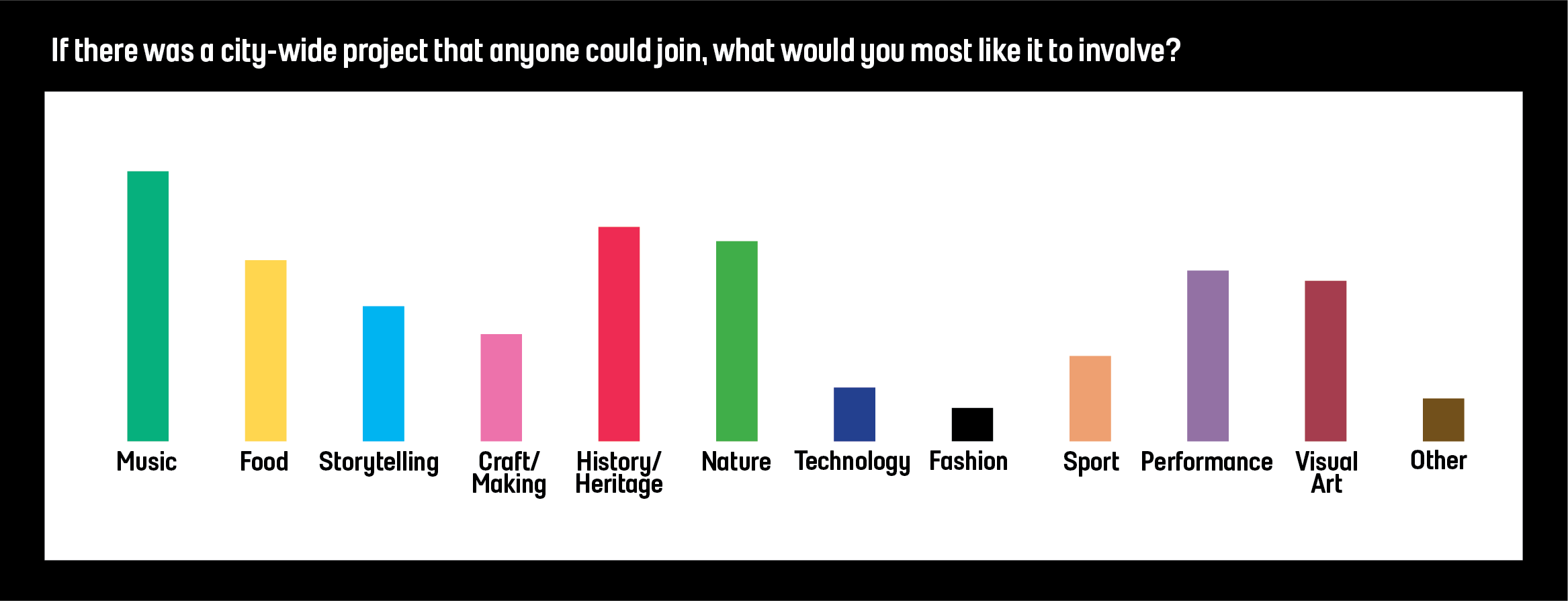
Music was the most frequently selected option, followed by history and heritage, nature and food. Visual art and performance also attracted substantial interest.
The breadth of responses reinforces the importance of recognising culture in its many forms. It also points towards opportunities for experiences that connect different interests: music and heritage, food and storytelling, nature and art, or making and performance.
The extraordinary and the everyday
People valued both exceptional cultural experiences and everyday opportunities to participate.
Some wanted ambitious, high-profile events that would create a sense of occasion and attract visitors. Others were excited by familiar places being transformed through creativity, or by activities that could happen close to home.
There was also recognition that a special cultural event can encourage people to discover a different part of their own city. The public survey showed an expansive and broad understanding of culture in Sheffield: one that includes artistic excellence, shared celebration, personal creativity and local identity. This was reflected in the bid through an indicative programme that weaved together ambitious programming, amplified existing events and festivals and celebrated grassroots activity.
Next week, we’ll explore how culture in Sheffield can be something created by all of us. You can read the full engagement report now.