

On Wednesday 25 November, we’re hosting a free workshop for anyone involved in Sheffield’s culture sector. We’ll imagine bold projects, develop new collaborations and explore what our city could achieve in 2029. Sign up for free.
We recently heard the exciting news that Sheffield has been shortlisted to become the UK’s next City of Culture in 2029, and here at Opus, we were proud to work on our bid as Lead Engagement Partner. What we learned didn’t just go into the bid – it helps us understand what people value about Sheffield, the experiences that create meaning and belonging, and the wider opportunities culture can create for the city.
In this series, we’re sharing seven ‘signals’ from the full engagement report that we heard loud and clear, giving us a snapshot of our city’s culture sector and where people would like to see it grow and develop in future. Last week, we looked at how we can build a city where creativity can flourish. This week, we’re looking at how our cultural future can be shaped by the next generation.
You said…
If you could create one event, activity or experience anywhere in Sheffield, what would it be and where would it happen?
“Hockney exhibition in one of the galleries, alongside a local artists exhibition to celebrate our location and history”
“A concert focused on the Peace Gardens and the surrounding streets. In 1999, there was a concert to celebrate the millenium – a very family orientated event with a wonderful atmosphere”
“Something that demonstrates the relationship between the city and the Peak District. I think the majority of people in the UK would have no idea that such a major city is a short journey from the UK's first national park”
“An intergenerational dance event at Sheffield Amphitheatre, with participants from lots of different dance styles, including dancers with disabilities, to show that dance in Sheffield is genuinely inclusive”
“An actual multi-discipline arts festival – something that has music, film, art, performance and beyond taking place in venues across the city, curated by the city's existing cultural practitioners that celebrates the work that is already being born here but puts it on a larger scale”
“International real ale festival at Kelham island”
“Kate Bush day in Devonshire Green”
“Pedestrianising the whole city for one day, making a massive art installation with local people”
“A tour of the steel industry hosted by Sheffield Forgemasters”
“A walking festival highlighting the best walking trails across the city with various artists featured at the end of each walk”
“A classical music festival to rival the proms, with lots of varied events, some outdoors”
“It would be a repeat of the Youdan Cup played between teams named after the original clubs and playing to the 1860 Sheffield Rules”
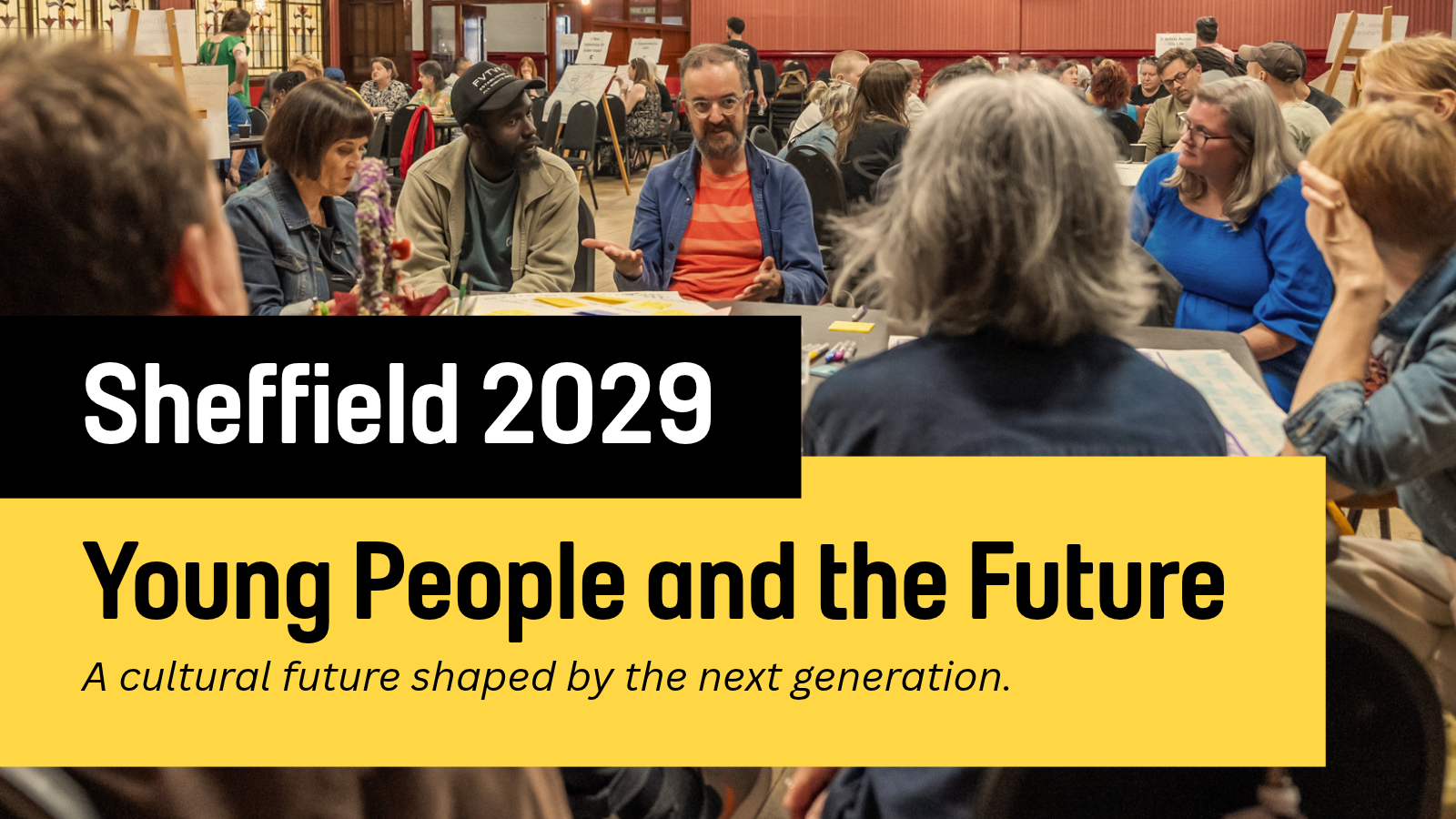
Young People and the Future
A cultural future shaped by the next generation
Young people were a central part of Sheffield's City of Culture engagement.
Through dedicated youth consultation and a Creative Assembly focused on future generations, participants explored how culture could become a more meaningful part of growing up in Sheffield.
The conversations were about more than opportunities to attend events. They explored creativity as a way of developing confidence, finding interests, meeting people, gaining skills and imagining future possibilities.
A strong theme was the importance of recognising young people as contributors and leaders in Sheffield's cultural life today rather than simply its future audiences.
Young people should help shape cultural decisions. Participants in the Future Generations Creative Assembly argued for meaningful youth leadership and opportunities for young people to influence cultural activity. The ambition was for their ideas and perspectives to be taken seriously.
Creativity should be part of growing up in Sheffield. Cultural experiences can help children and young people discover new interests, develop confidence and connect with others. Participants imagined more opportunities to explore different creative activities in schools, community settings and neighbourhood spaces.
‘I'd love to see young people at the heart of the programme, with performances, festivals and creative projects that showcase the incredible talent and diversity of Sheffield's communities’
Public survey respondent, July 2026
The route from participation to opportunity matters. Young people need opportunities to continue developing their interests, build skills and understand where creativity might take them. Cultural participation can open pathways into further learning, volunteering, leadership and careers. Young people’s participation in arts and culture is particularly challenged by the cost of living crisis and an inability to clearly find out what is happening and how to get there. Our city of culture programme must create opportunities that overcome these barriers. Finding new ways of more effectively communicating with young people and through schools was highlighted as a priority.
Organisations and young people asked for creative internships based on models long established in the city across other sectors. Sheffield’s very active and successful music education sector does particularly great work with care experienced young people. This type of work could be scaled across multiple artforms with different communities of interest and be scaled up as part of our City of Culture programme.
Young people's cultural interests are diverse and evolving. Music, dance, film, digital creativity, gaming, fashion, visual arts and performance all offer ways for young people to express themselves. The engagement reinforced the value of recognising contemporary creative interests alongside more established cultural forms.
Local connections are important. Schools, youth organisations, community groups and trusted adults can play a valuable role in introducing young people to cultural opportunities and supporting their continued participation. Much of the city’s infrastructure in this regard has experienced massive challenges in funding. Our City of culture programme must invest in the capacities and networks that already exist.
The Future Generations Assembly repeatedly returned to the importance of longterm impact and planning led by young people rather than one-off activity.
Participants discussed youth leadership, stronger connections with schools, neighbourhood opportunities and ways for young people to influence cultural decisions. They also imagined the legacy that Sheffield's cultural ambitions could create for children growing up in the city over the coming decade.
The engagement points towards a city where young people can see creativity as a meaningful part of their lives and futures. This is particularly important in a rapidly changing world, with the development of AI and its potential effects on future jobs. The aspiration is for children and young people to have opportunities not only to experience culture, but to create it, influence it and develop through it.
A successful cultural future for Sheffield will be one that young people recognise as their own. This was reflected in the bid through a dedicated youth panel that would shape City of Culture programming, opportunities for young people to lead programming and activities and opportunities for meaningful youth work opportunities.
Next week, we’ll look at how culture in Sheffield can contribute to health and wellbeing. You can read the full engagement report now.