

What mushrooms tell us about the fragility of our economy – and what we need to do to transform it
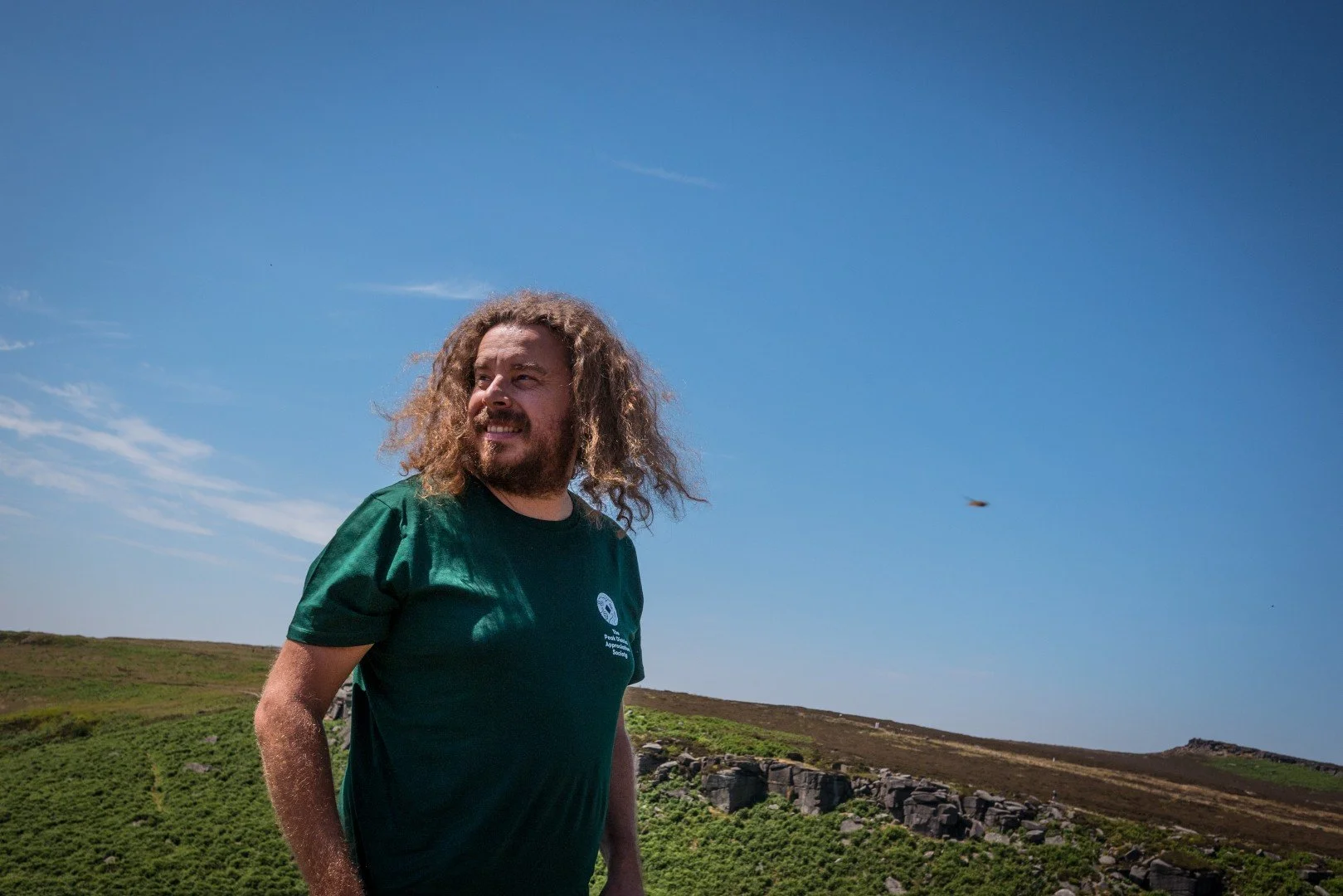
Terry Murphy in the Peak District.
As conversations around social value and systems change become more common, it still feels difficult to describe what actually enables communities and places to flourish over time. In this essay, Terry Murphy of the Sheffield Social Enterprise Network explores what forests, fungi and mycelial networks might teach us about economies, institutions and the hidden relational infrastructure that sits beneath visible social and economic life.
Drawing inspiration from Merlin Sheldrake's Entangled Life, he asks whether many of the things we currently measure are merely the mushrooms emerging from a much larger living system underneath.
Over the past few years, as I’ve become more involved in systems work at an institutional level, I’ve become increasingly interested in how human systems relate to natural ecological systems.
Conversations about social value, public value and systems change eventually collide with deeper questions. What creates resilience? What allows communities to adapt? What conditions enable places to flourish over time?
Alongside this, I’ve developed a growing interest in mycology. Reading Merlin Sheldrake’s Entangled Life helped sharpen a metaphor I’d already had circling around my head: what if many of the things we currently measure in society are actually just mushrooms?
Let me explain. Mushrooms are only the fruiting bodies of a much larger organism. Beneath the ground exist dense underground fungal networks known as mycelium. Vast webs of microscopic threads move nutrients, water and chemical signals across entire ecosystems. The mushroom itself is temporary – the real organism is the living network beneath it.
In forests, trees are not simply isolated organisms competing independently for survival. Research suggests older trees sometimes transfer carbon and nutrients to younger saplings through fungal networks. Different species cooperate and compete simultaneously, but the health of the wider ecosystem depends less on the strength of individual organisms and more on the quality of the relationships between them.
That idea has become increasingly difficult for me to ignore when thinking about our own social and economic infrastructures.
Measuring the mushrooms
Much of modern public life is centred around measuring visible ‘fruiting bodies’: GDP growth, jobs created, contract values, housing targets and social value scores. These things matter – mushrooms are real. But they’re not the whole system.
Anyone who’s experimented with growing mushrooms at home will know that if the mycelium has not properly spread throughout the substrate, you can still end up with a few large mushrooms emerging from concentrated pockets while much of the remaining substrate stays barren and disconnected. Large visible outputs can coexist alongside fragile underlying conditions.
Healthy mycelial networks distribute nutrients widely across the ecology rather than concentrating growth in isolated places. That feels uncomfortably relevant to the way our current economic system is set up.
Many of the outcomes we care about most emerge from relational infrastructures that remain largely invisible in decision-making processes. Trust, belonging, mutual aid, local knowledge and social cohesion rarely fit neatly into dashboards or procurement frameworks, yet they often determine whether places remain resilient when crisis arrives.
Much of this thinking has also been shaped by the work of Indy Johar, whose writing explores how institutions become constrained by the signals they’re capable of recognising and rewarding. His work repeatedly returns to the idea that the health of societies depends not on visible economic outputs, but on the quality of the social substrate beneath them.
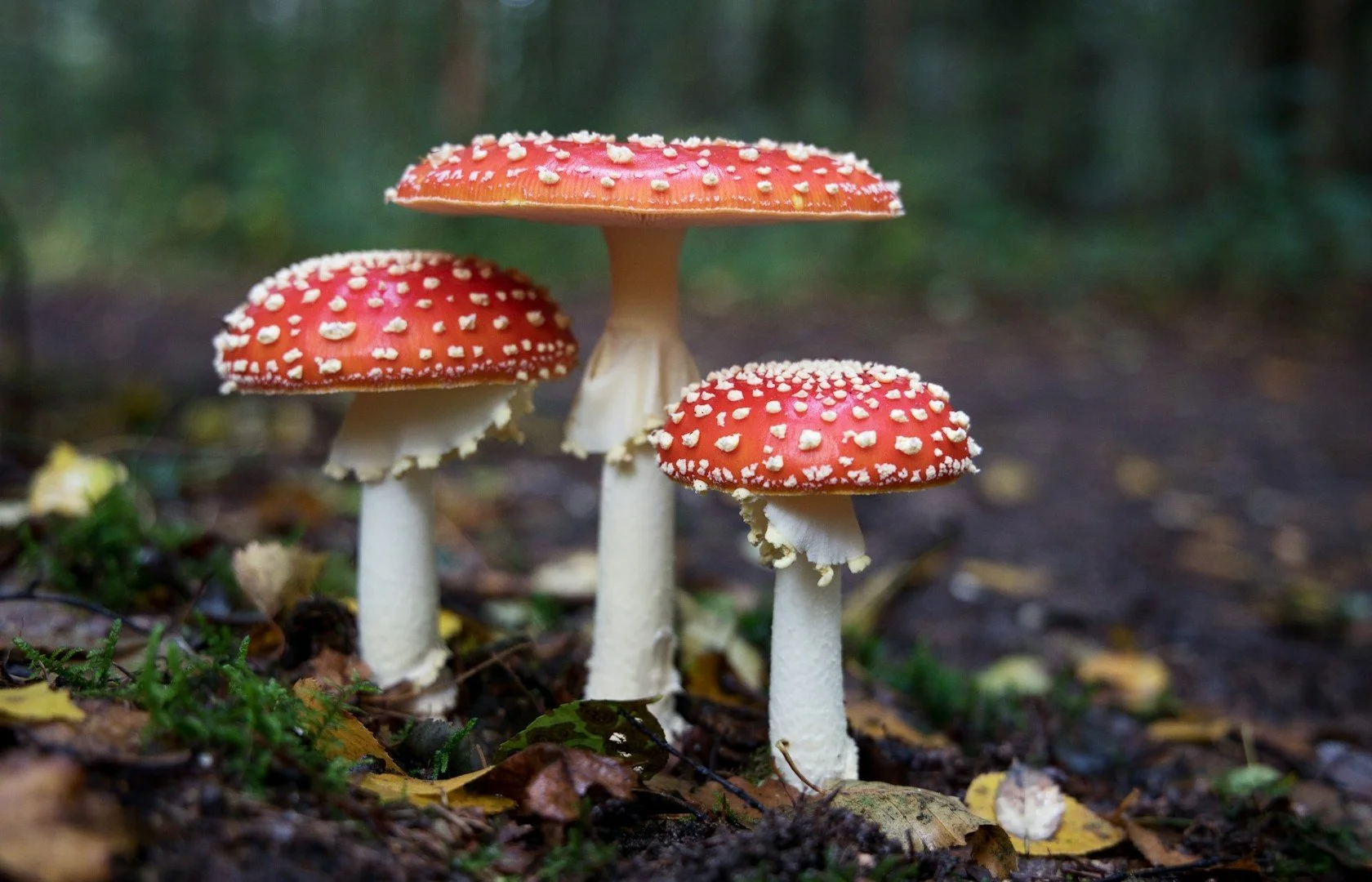
In mycelium networks, mushrooms are simply the fruiting body of a much larger organism (Hans Veth on Unsplash).
Fruiting without rooting
If we only learn to see what appears above the surface, it narrows not only what we measure but what we’re capable of imagining.
Modern society conditions us to focus on measurable growth, immediate returns and visible success. But thinkers like Rob Hopkins and Phoebe Tickell argue that one of the deepest crises we face is a crisis of imagination itself.
If all we can see are the ‘fruiting bodies’ of the current system – the mushrooms – then the system itself begins to feel inevitable. The visible surface of things starts to define the limits of what’s possible.
You can usually tell when the underlying ecology of a place has weakened. Loneliness rises, communities fragment, and public life becomes increasingly transactional. Everything starts feeling brittle. At the same time, systems continue producing impressive-looking mushrooms: growth figures may still look healthy.
Interestingly, fungi themselves sometimes produce visible fruiting responses under conditions of stress or instability. In mushroom cultivation, weakened substrates can still produce a handful of large mushrooms before the wider ecology deteriorates further.
The mushroom is real. But its visibility can mask the fragility underneath.
None of this means visible renewal is meaningless: shared civic pride matters. But fruiting without rooting can only take an ecology so far. Eventually the condition of the soil reasserts itself.
‘Annual economies’ and perennial systems
One of the things Sheldrake does brilliantly is resist the temptation to misuse natural networks to tell simplistic moral stories. Forest ecologies contain cooperation, but also competition, opportunism and exploitation, all at once.
This aligns with a growing critique of overly romantic interpretations of the so-called ‘Wood Wide Web’. Mycorrhizal networks are real and ecologically important, but forests are not perfectly cooperative utopias. They contain rivalrous dynamics and uneven exchange, too.
Forests remain healthy because of cycles of decay and renewal. Fungi do not only connect living systems – they break down dead matter, releasing nutrients back into the wider ecology so new growth becomes possible. Human systems often struggle to do the same.
Some organisations behave reciprocally, others extractively. Some circulate resources locally and strengthen the wider ecology around them, while others concentrate value at the same time as weakening the soil beneath them.
Industrial monoculture farming is a useful example. Vast annual crops can produce enormous short-term yields while degrading soil health and biodiversity over time. Then there’s Japanese knotweed, which spreads aggressively and suppresses surrounding biodiversity while appearing highly successful on the surface.
Parts of our economy feel similar.
Some organisations behave almost like economic annuals or invasive species, optimised for rapid extraction, short-term growth and measurable performance, but with little long-term attachment to place.
And just like industrial monocultures, many of these systems only remain productive thanks to ever-greater external intervention. Cheap credit, subsidies and continual crisis management act like fertilisers sustaining visible growth.
Alongside this is another hidden layer. Much like how irrigation systems keep exhausted soil productive, huge amounts of unpaid and underpaid relational labour quietly keep society functioning. Carers, volunteers, community organisers and overstretched public servants continuously replenish the social soil that other actors are simultaneously depleting.
By contrast, perennial networks behave differently. Perennial plants invest deeply in root systems because they expect to remain in relationship with the same ecology for a long time. Oak trees are a powerful example: their roots become deeply entangled with fungal networks beneath them, and their strength emerges partly through relationship.
Many community organisations, cooperatives and civic initiatives feel perennial in character. Relationships matter, knowledge gets shared, and surplus is reinvested locally. Value circulates rather than simply accumulating.
The surface indicators might still look similar from the outside – two organisations may both create jobs or deliver measurable social value. But the underlying ecology producing those outcomes may be profoundly different.
The ecology beneath the metrics
This is where many current social value and procurement frameworks begin to feel limited. They measure the mushrooms while struggling to perceive the ecology beneath them.
A company can bolt a few visible social value commitments onto fundamentally extractive operating models and still score highly. Meanwhile, deeply embedded organisations whose entire structure is built around reciprocity may struggle to articulate “additional social value” precisely because the value is woven through the whole organism itself.
Again, the mushrooms alone cannot fully tell us what kind of ecology produced them.
One of the most fascinating parts of fungal ecology involves plants that do not photosynthesise at all. The ghost pipe plant survives by drawing nutrients through fungal networks connected to nearby trees rather than through sunlight directly.
The relationship is partly parasitic, though forest ecologies are rarely organised through simple binaries of cooperation or exploitation. Dependency does not necessarily equal failure.
Socially, I think of tiny grassroots groups and volunteer-led initiatives that survive through wider circulations of support around them. Different organisations play different roles: some stabilise damaged environments, some redistribute nutrients, while others quietly hold fragile communities together beneath the surface.
The problem comes when systems become obsessed only with visible productivity and measurable outputs. A healthy forest contains many different forms of life interacting together.
Perhaps healthy local economies do too.
Regenerating the soil
Eventually these stop being technical questions about procurement or measurement frameworks and become deeper philosophical questions about what we’re actually trying to produce with the systems we build.
What are economies for? What kinds of relationships are our institutions rewarding? Are we building systems that deepen extraction, isolation and fragility, or ecologies capable of mutual flourishing?
Perhaps one of the most important questions facing us is not simply how we produce more mushrooms, but how we regenerate the living networks underneath that allow people, communities and places to flourish.
Because without healthy soil, eventually the mushrooms stop appearing altogether.
Further reading and influences
Indy Johar: The Signals Markets Can Hear — and the Signals They Cannot
Boundaryless Podcast: Learning Centered Organizations for the 21st Century with Indy Johar
SE UK - The Rules are there - so why aren’t councils using them
Accidental Gods: Brilliant Minds with Kate Raworth, Indy Johar & James Lock at Festival of Debate
Author’s note: Some of the drafting and structuring of this essay was supported using AI language tools. The article has then been edited by a professional writer from Now Then magazine. As someone with an ADHD brain, I often think in rapid, interconnected fragments rather than neat linear sequences, and I’ve found these tools genuinely helpful in helping me catch, organise and develop ideas that might otherwise disappear before they fully land. The reflections, arguments and perspective throughout remain rooted in my own thinking, reading and lived experience.