
Sharing what we’ve learnt: neighbourhood mapping
Over the past few years we’ve been involved in co-creating the Sheffield City Goals, and alongside them, a set of civic infrastructures that will enable us to realise the goals together by 2035. One of these infrastructures is what we’re calling Neighbourhood Conversations – new ways of doing neighbourhood governance linked to local Neighbourhood Funds – and it’s an idea we’re super interested in at the moment.
Sheffield's neighbourhoods are full of knowledge, care, energy and action. How can real power and agency be meaningfully devolved into the streets, places and communities that make up our city? How can we better recognise, connect and support the people and organisations who want to help their neighbourhoods to thrive? We were really curious as to what this might look like in practice, so we took it upon ourselves to play around with some of these ideas.
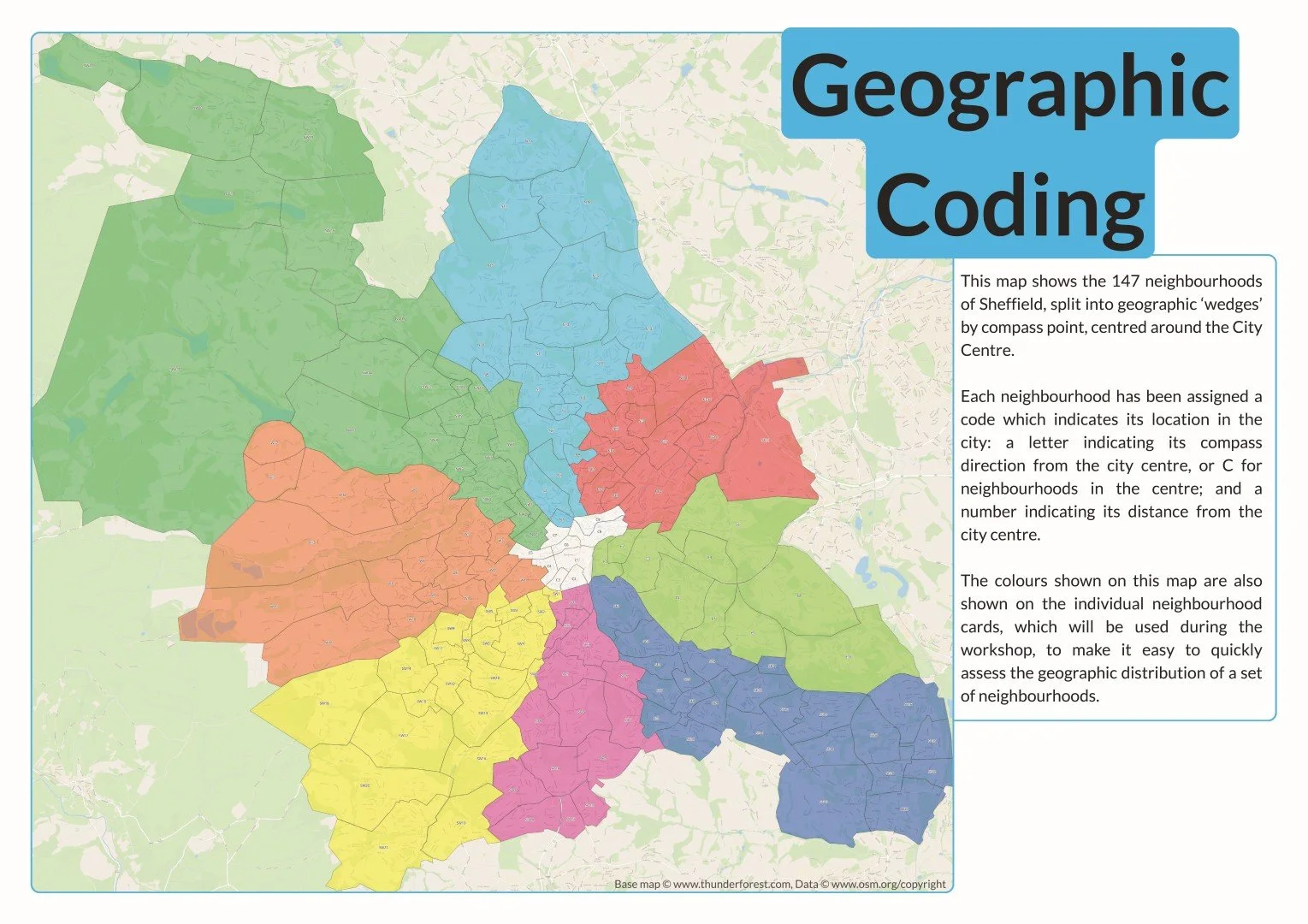
A few weeks ago we brought together a handful of trusted allies and partners to take part in a sandbox exercise. Our starting point is that meaningful action takes place in neighbourhoods of between 4 to 5,000 people – what we call the hyper-local level. The neighbourhood borders and definitions we’re using stem from the brilliant work carried out by Citizen Network and Data for Action. They convened residents across Sheffield and asked what neighbourhoods they felt they belonged to, ending up with a hyper-local map of 147 named and unique places.
For the first phase of Neighbourhood Conversations we’re working with limited resources, so can only invest in a handful of neighbourhoods (over time, the intention is to create opportunities for all of Sheffield's 147 neighbourhoods to have more agency in shaping and contributing to the City Goals). We asked our sandbox participants: what would a strong rationale for selecting this set of neighbourhoods look like?
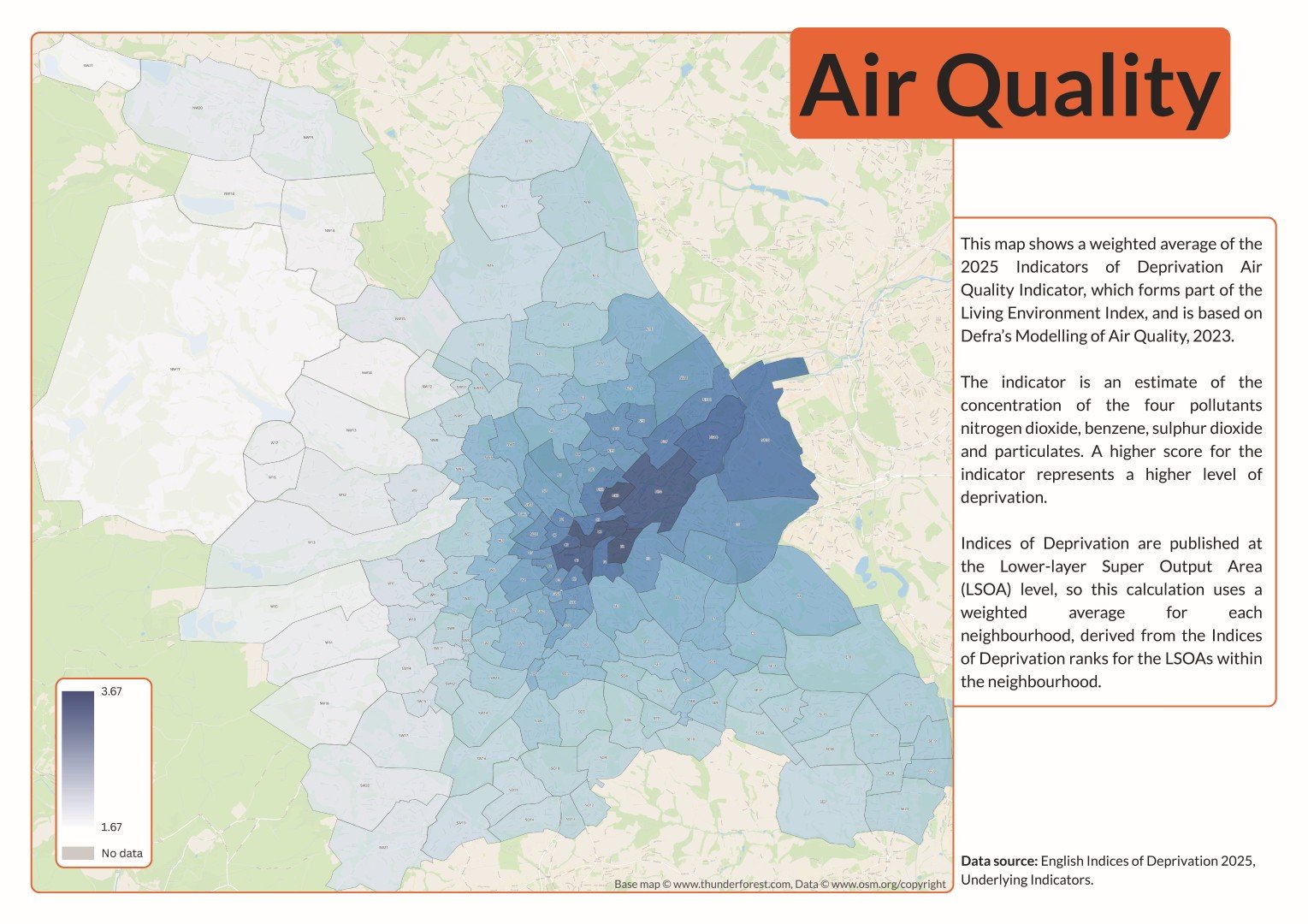
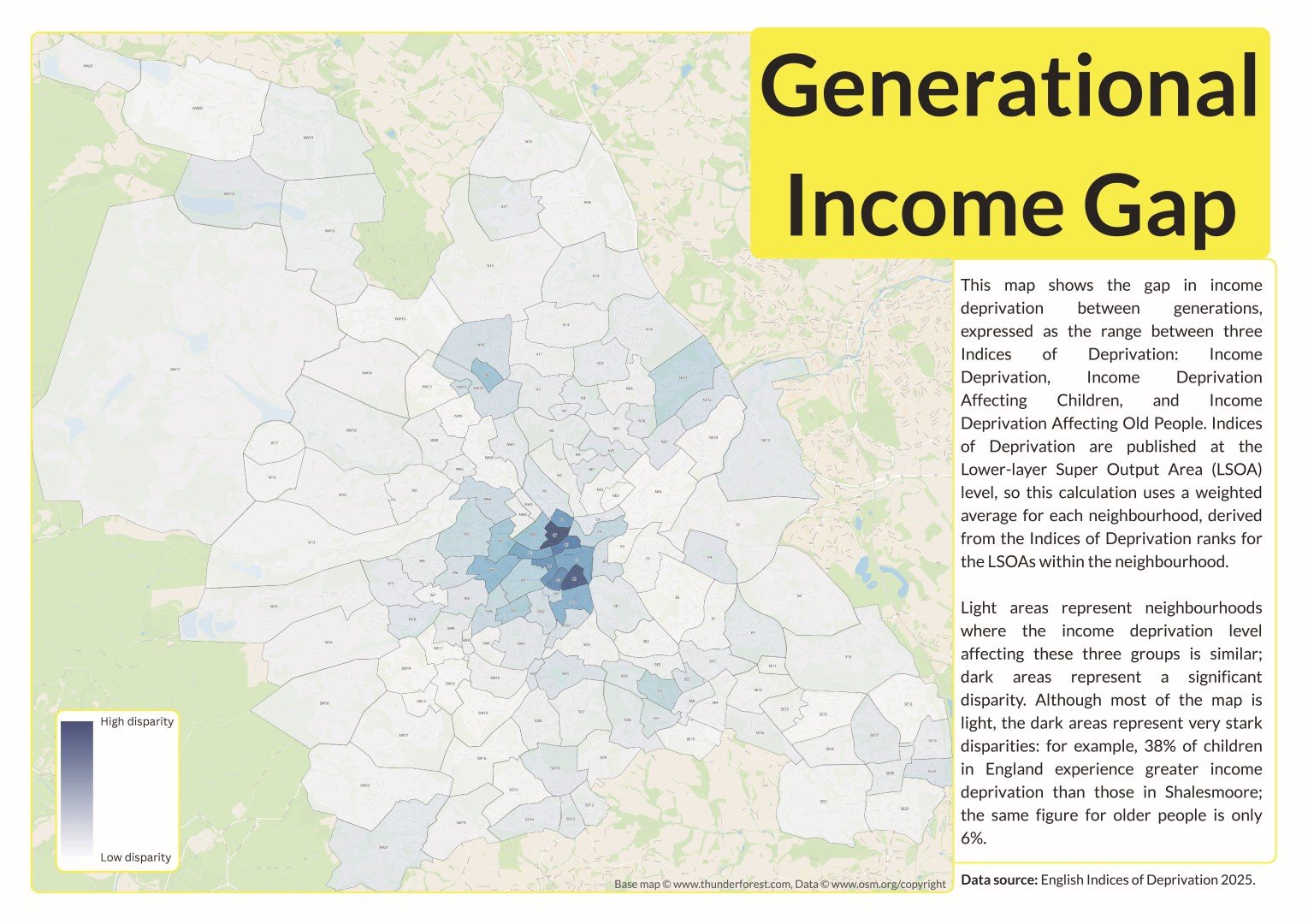
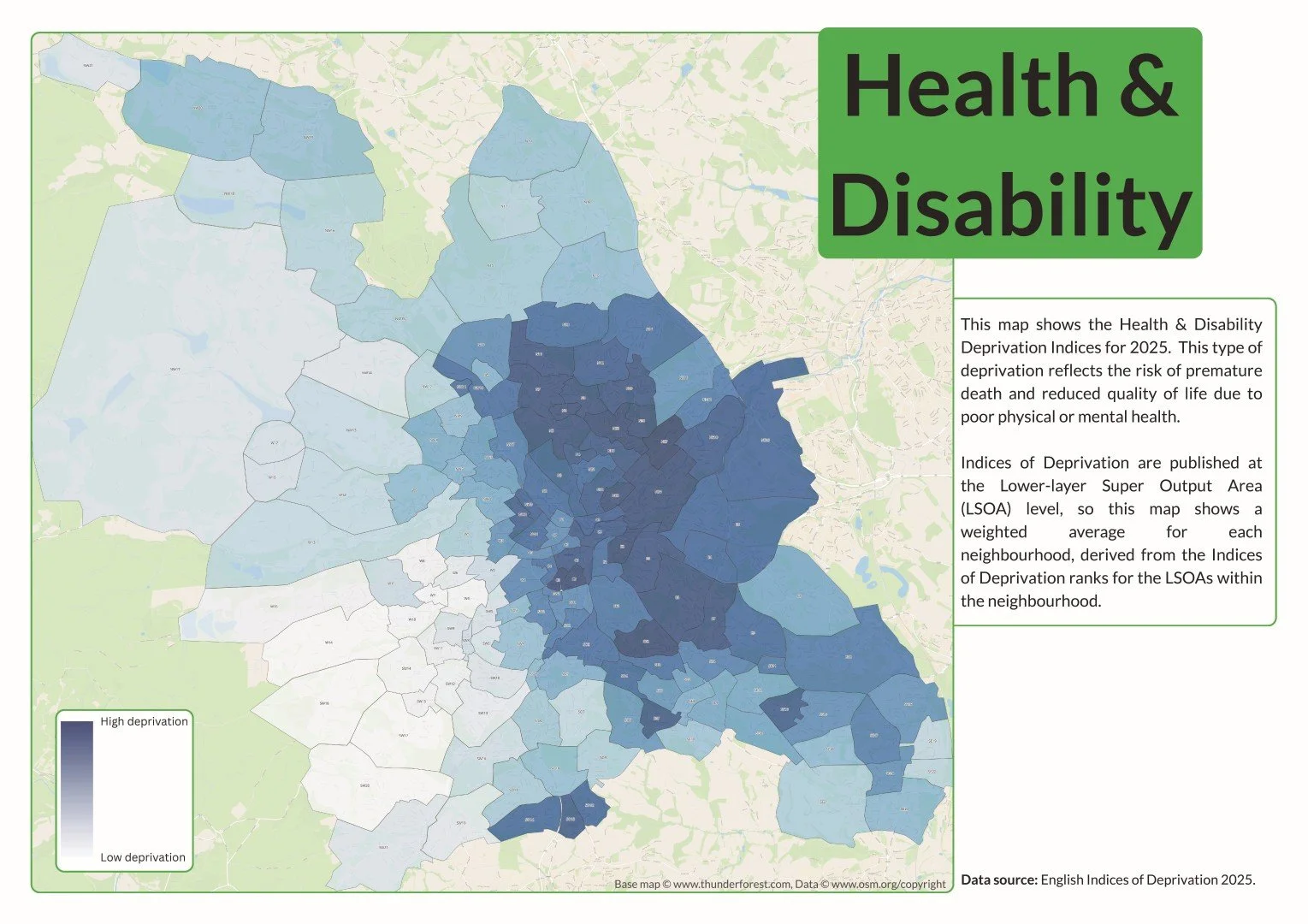
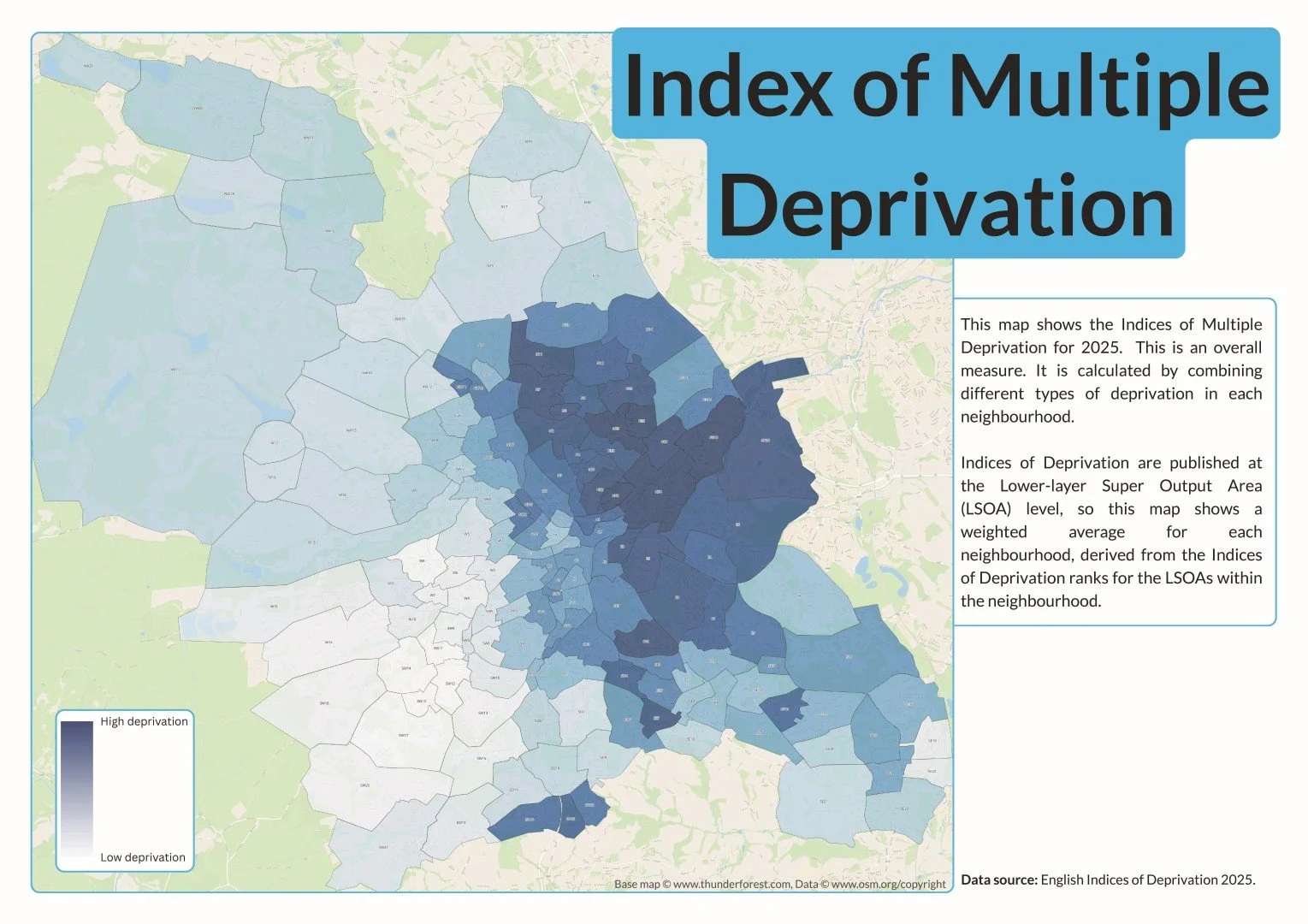
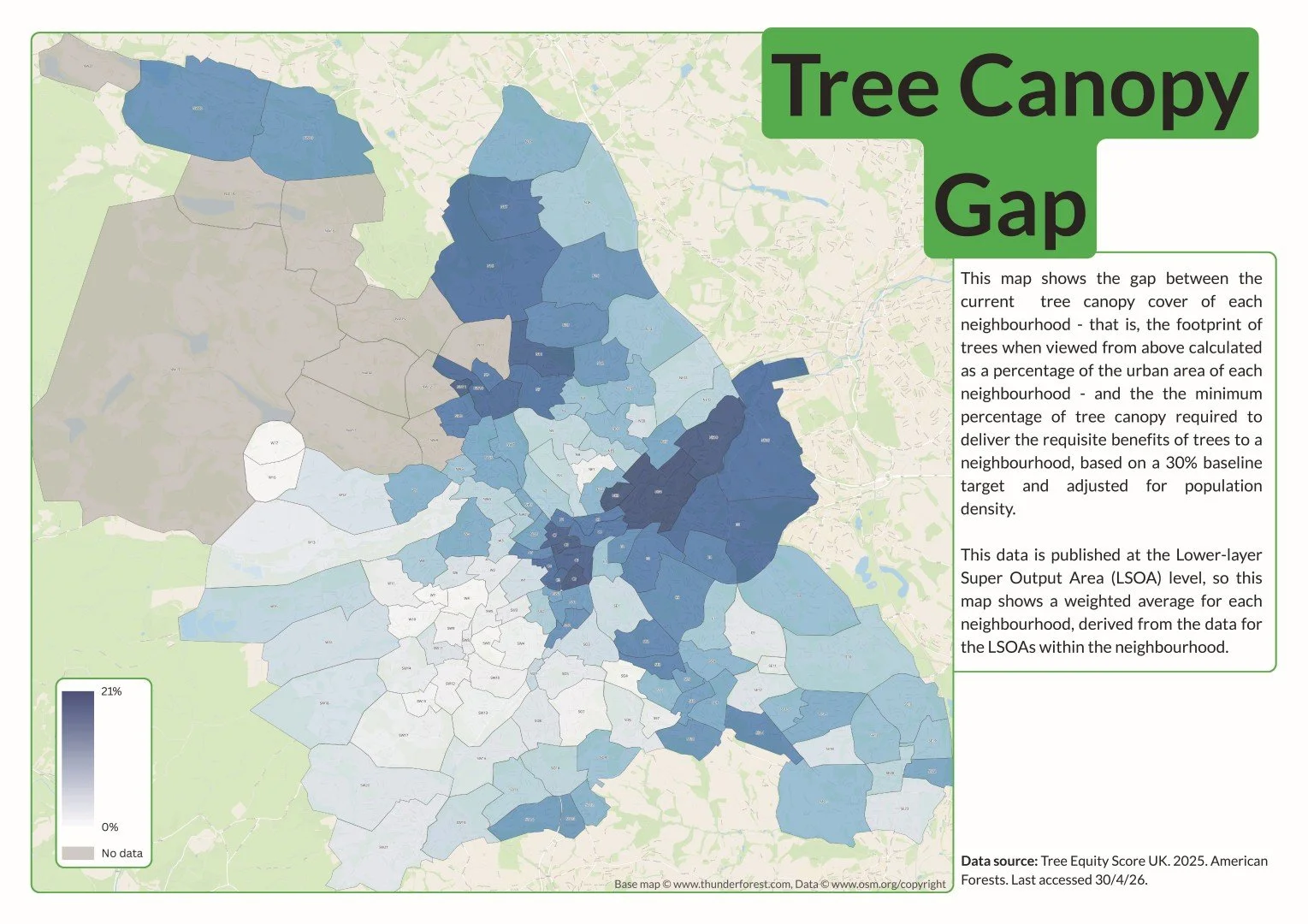
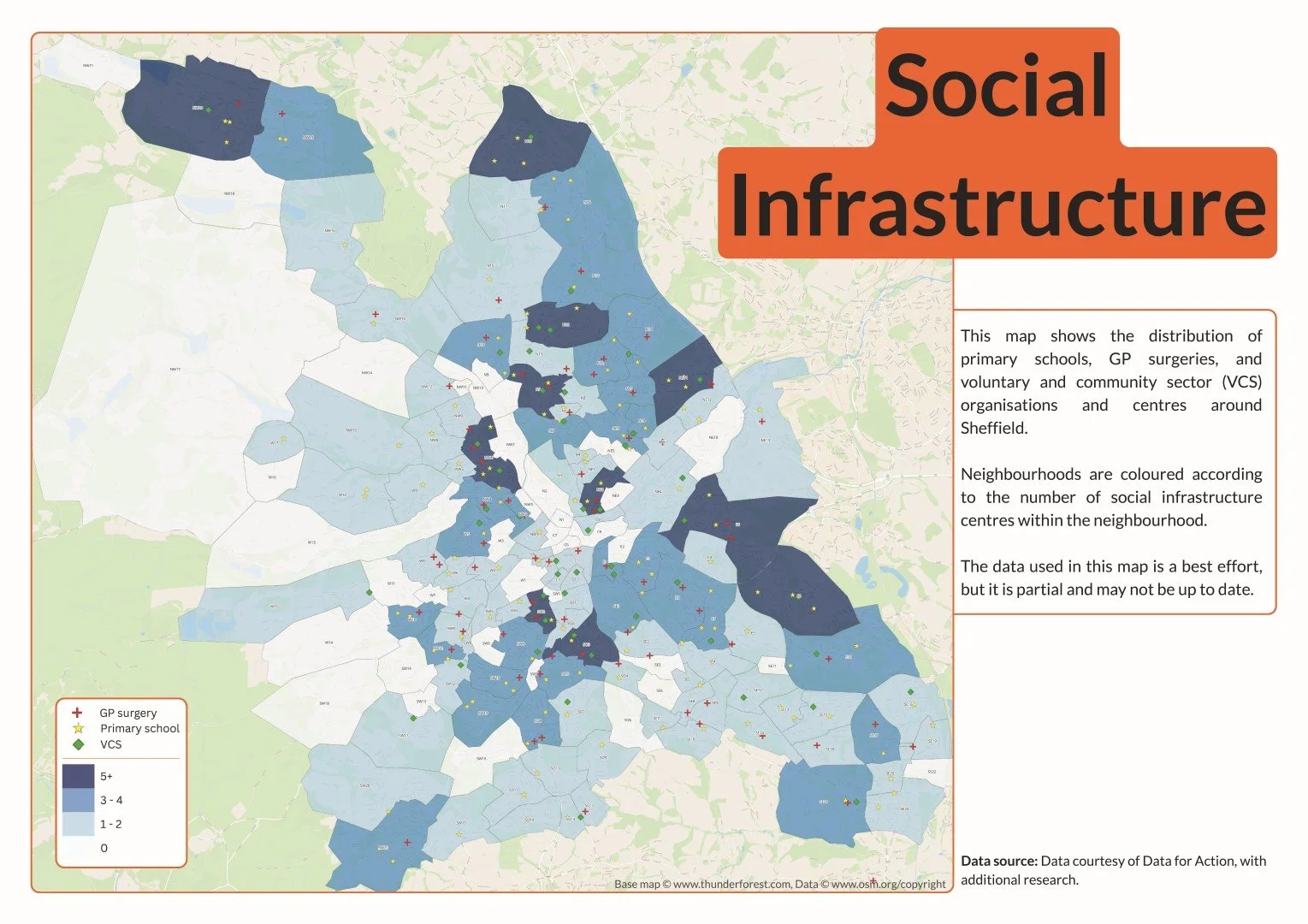
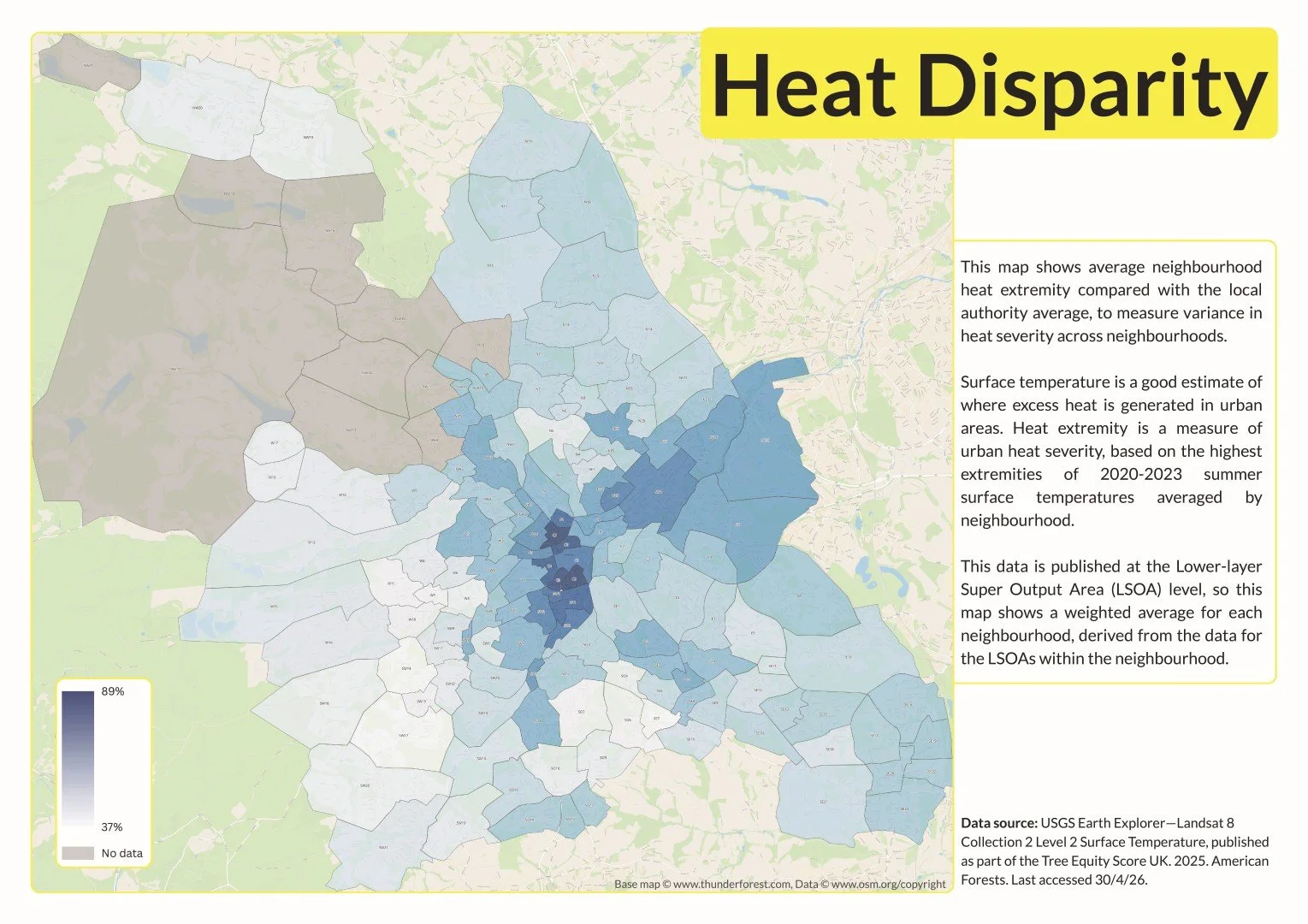
Our sandbox experiment first took a data-driven approach, using maps of the city overlaid with social and environmental indicators such as air quality, generational income gaps, tree canopy coverage, the Index of Multiple Deprivation (IMD) and more. You can see the maps we used below. We explained to our participants one way we thought you could use this data to come up with a diverse set of neighbourhoods across the city facing different challenges for phase one.
We then invited our participants to tell us which neighbourhoods they’d start with, using their own experience working in institutions that operate across the city. We looked at the city’s 147 neighbourhoods through a set of nine compass points (including the city centre) to ensure geographic spread and a range of social indicators, highlighting areas of Sheffield that fall within the bottom 25% on the IMD alongside other datasets like tree canopy, heat and social infrastructure. This approach of open dialogue about the strengths and challenges facing each neighbourhood gave us a new and very different dataset to one purely based on data.
Having tested these approaches, we now want to open the conversation up to more people across the city. We’re aiming to invite a larger group to a second workshop later this month which we’re going to run as a ‘generative inquiry’, surfacing more perspectives, opinions and suggestions about how a neighbourhood selection process might work. In this session, we’ll hope to uncover more insight into where and how neighbourhood governance, neighbourhood decision-making and local Neighbourhood Funds might begin to be tested and learned from across Sheffield. This workshop isn’t designed to be a decision-making space. Instead, it will be an opportunity to share knowledge, experience and insight about the city’s neighbourhoods, and explore what a diverse set of starting neighbourhoods for learning might look like.
This will always be an imperfect process. But the more information we can gather, the more we’ll be able to spot patterns and get better insights that will allow us to select a set of neighbourhoods for a first phase of work using a methodology we can be proud of. We hope this will unlock the first wave of neighbourhood governance in the city, allowing community anchors to convene citizens in place to come up with bold and ambitious ideas to implement locally. The idea is that a form of neighbourhood governance would be backed up by Neighbourhood Funds, giving local people the agency and resources needed to steward projects that will help realise the Sheffield City Goals by 2035.
We’ll planning on creating a new tool to allow everyone in Sheffield to have a go at selecting their own set of neighbourhoods for the project – watch out for it in our next monthly newsletter.
Bash Muca