

Why we can’t tackle Sheffield’s most urgent problems without talking about neighbourhoods
…and why neighbourhood governance without economic agency is a performance we can't afford.
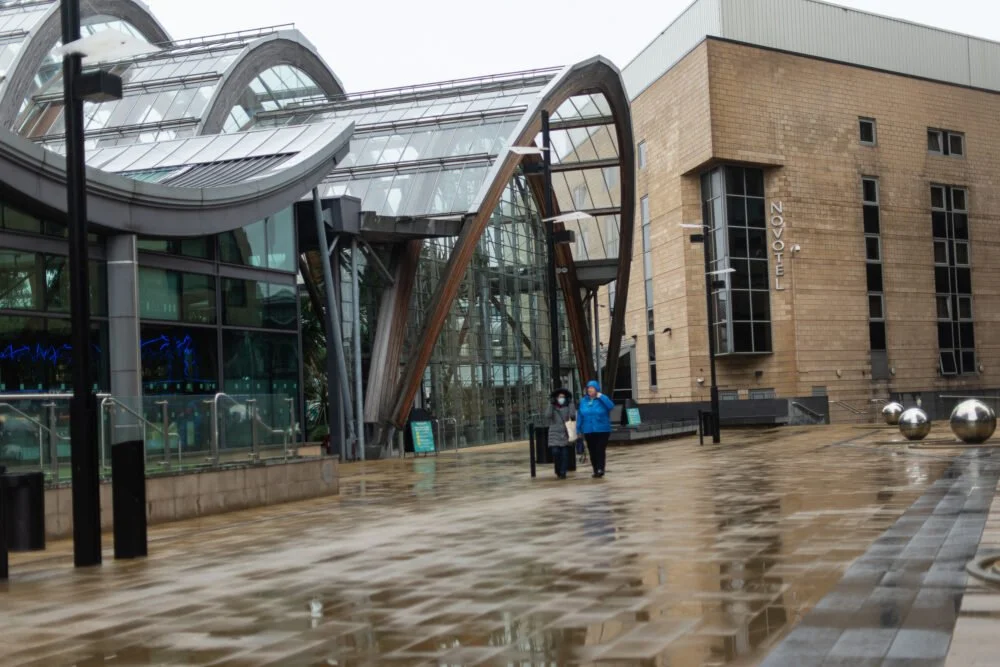
I’ve lived and worked in Sheffield for more than 20 years, long enough to know that it’s not just one place, but many places. Different parts of the city carry their own unique character, their own strengths, their own ways of celebrating and coming together, and their own ways of getting by when things get tough.
I’m writing this in mid-April 2026, in the run-up to the local elections. Walking through the city, you start to notice it – placards on lamp posts, posters in windows, messages asking you to vote red, blue, green, light blue, yellow. Take part. Have your say.
Representative democracy matters, but there’s a slight dissonance. Because the scale at which those choices are being presented doesn’t quite line up with where life is actually lived. The challenges people are facing – around health, cost of living, social relations, housing, their environment – don’t sit neatly at that level. They show up in much more immediate ways, in streets, homes and neighbourhoods.
That raises a quieter, more practical question about the quality of our response. The challenges people are living with don’t arrive neatly separated. They show up entangled, in the texture of everyday life, in different combinations in different places. Responding well to that complexity depends on being close enough to understand what’s actually going on and make careful, grounded decisions about what might help. What helps is usually not one intervention at a time. It’s the kinds of responses that can hold several things together – improving a home in a way that supports health and biodiversity, strengthening relationships while creating opportunities to learn new skills, building something that makes life more stable while also building community wealth.
It’s also about being affected by it, and living with the consequences. Feeling the pull to do something because it’s your place, your street, your neighbourhood. That can bring a different kind of attention and a different kind of energy.
But there’s a gap between the scale at which we’re asked to participate in democratic life and the scale at which these challenges are experienced, felt and worked through, and in the kinds of agency people have to act on those challenges – the ability to shape decisions, influence resources and make change where it matters most.
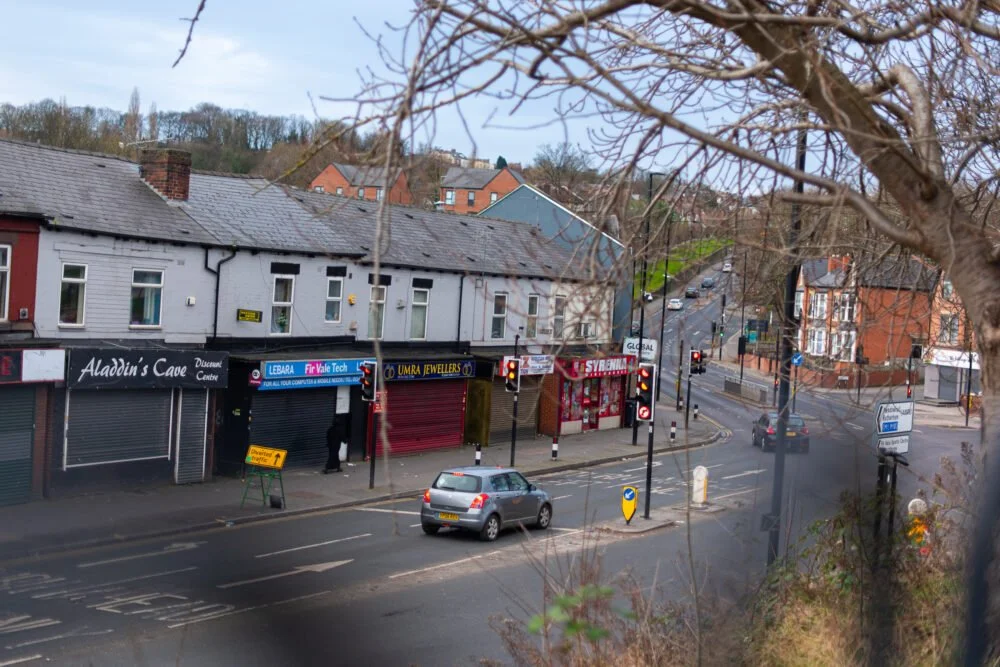
Attention is turning back to neighbourhoods
What is striking at the moment, and what many people in Sheffield are sensing, is that attention is starting to turn back towards those many places – those neighbourhoods – that make up the city. Not necessarily in a single, coordinated way, but from a number of different directions at once. That’s really hopeful.
At the same time, it’s also being driven by a growing understanding of volatility – that the conditions we’re living in are becoming more unstable and that pressures are no longer isolated but compounding. As those pressures become more visible in everyday life, attention naturally turns towards the places where they’re felt most clearly, where responses might begin to take shape, and towards the people within them whose knowledge, energy and commitment have often been left out of the ways change is imagined and organised at city, regional and national levels.
You see this degenerative, recursive and compounding volatility in the continuance of local stories and lived experiences in Sheffield, as shown by Fairness on the 83 – a single bus route, less than an hour end to end, tracking a gap in life expectancy of more than ten years. That finding was published more than a decade ago and the pattern is still there, highlighted more recently in Sheffield’s Poverty Truth Commission and in the ongoing work of the Race Equality Partnership.
These things tell us something important about how long structural inequalities can persist when the way we respond doesn’t shift. They’re not just abstract gaps in provision, access or equity. They sit very concretely in streets, in homes, in access to green space, in the texture of everyday lives, in the uneven presence of agency, investment and the capability to respond at that same scale.
You see it too in the NHS, where there’s a growing push towards working at a neighbourhood level. The idea is simple enough – if people are better supported where they live, fewer end up needing acute care – but it opens up a deeper set of questions. What do we mean by care in the first place? Where should that care sit – within the places and relationships people already have or somewhere more distant? What scale of place keeps relationships, care and decisions within reach?
Because care, at its best, isn’t something that gets delivered and then withdrawn. It’s something that sits in relationships – in the ways people look out for each other, in the informal networks that hold things together long before a service steps in. When care becomes too centralised or transactional, it starts to lose that quality. It becomes something done to people, rather than something held with them, and it loses the qualities that enable it to be preventative. That’s where it can become extractive too – pulling people through systems, measuring outputs, but not always strengthening the fabric that would make support more sustainable in the long run — and often moving resources out of the very places where that support is needed, rather than building capacity and economic life within them.
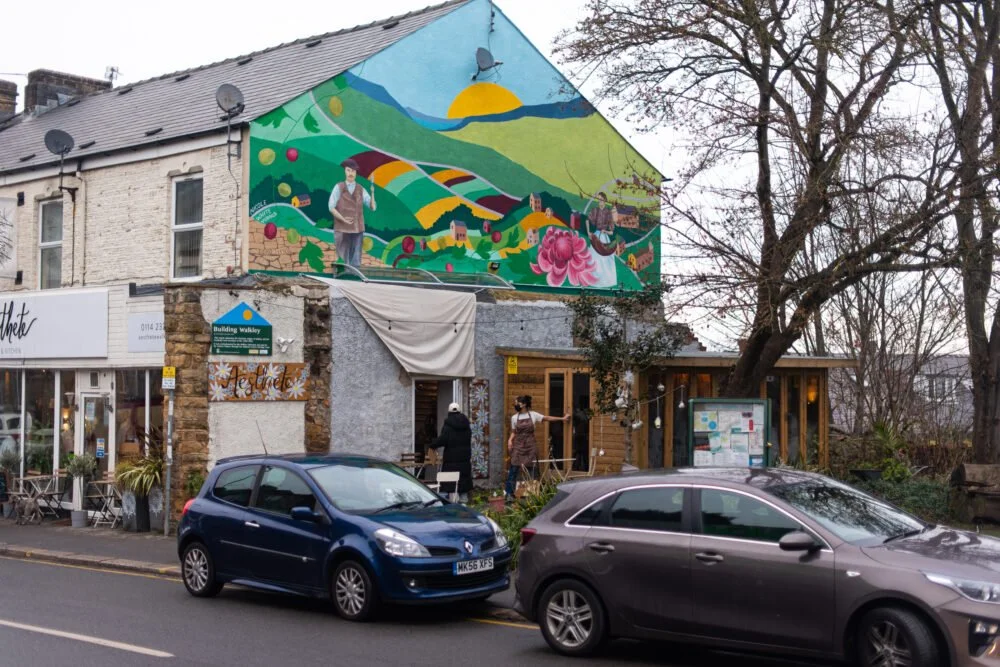
Change and resilience
Within all this, institutions and policy-makers are asking neighbourhoods to navigate many changes. The transition to a low-carbon economy. The pressure on health and care systems. Changes in work and income, food systems and biodiversity. The ongoing effects of poverty, marginalisation and inequality. Of course, these things don’t arrive separately. They overlap and they land very differently in different places. And they’re starting to build on each other in ways that feel harder to contain (for example, the war in Iran has driven hikes in food and fuel prices, which in turn drives further inequality, which in turn drives poorer health outcomes). What used to be a shock you could recover from becomes a pattern you have to live with.
Something deeper is shifting. Volatility is no longer occasional – it’s becoming part of the baseline. Pressures accumulate: a rise in energy costs feeds into food prices and health outcomes, which feeds into work, which feeds into incomes and stress on services, and so on. Over time, that starts to wear down the ability of systems and places to keep absorbing shocks. The question then becomes less about bouncing back, or dare I say ‘leveling up’ – and more about what are the foundational public goods that enable a greater resilience to volatility, so we can keep going at all.
In that context, continuity as a precondition for any transformation starts to matter in a different way. It’s about whether people can maintain a sense of stability, dignity and possibility even as conditions shift around them. That brings an equity question into sharp focus, because if some neighbourhoods have the relationships, resources and room to adapt and be resilient, while others are already stretched, then volatility deepens inequality. Resilience can’t be something a few places have. It has to be something we build across the whole city.
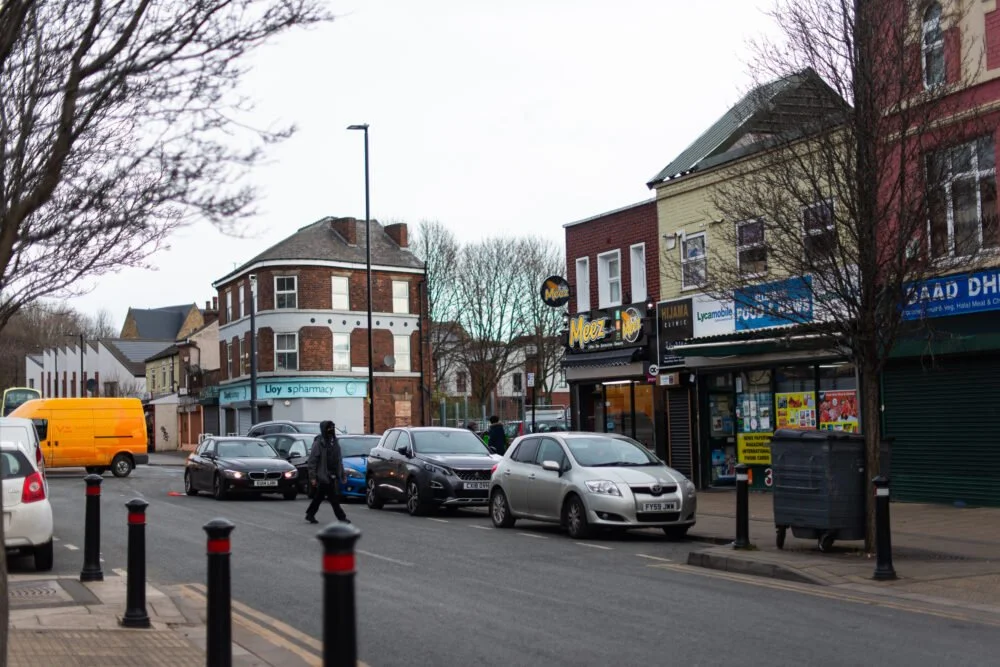
To someone with a hammer, everything looks like a nail
Faced with that kind of instability, the instinct is often to centralise – to try to design a single solution and roll it out at scale. But there’s another way of thinking about it. Instead of trying to standardise the response, we can try to create the conditions for many responses to emerge at once. That means building some shared ‘scaffolding’ – civic infrastructures that hold common direction, values and accountability – while also creating the conditions for resources, money, data, learning and decision-making power to flow into places, leaving space for neighbourhoods to act in ways that are supported, inclusive and make sense locally.
In Sheffield, that’s where the City Goals and their civic infrastructures for collaboration, data, financing, young people and neighbourhood governance start to show their value. Not as a plan to be implemented in the same way everywhere, but as a way of holding coherence across difference and enabling more people and neighbourhoods to act with real agency – mobilising action in parallel across the city, while still moving in a shared direction and learning from each other over time.
Take retrofit. From a centralised perspective, it looks like a delivery problem: bring in a small number of large contractors, upgrade homes as efficiently as possible and move on. Some good will come of that, but it risks missing what’s actually going on in people’s lives – the damp that keeps coming back, the heating system no-one quite understands, the way energy costs interact with income, health and housing conditions.
From a neighbourhood-led perspective, it looks different. It builds skills locally. It creates the conditions for many retrofits to happen in parallel, shaped by the realities of each place. It brings people into the process, rather than treating them as recipients of it. It’s slower to set up, but it has a different kind of staying power. SY Ecofit, GreenStreets and Sheffield Community Land Trust are just three groups in the city who are already thinking about this. Further afield, there’s WeCanMake in Bristol, Retrofit House in Birmingham and East Marsh United in Grimsby.
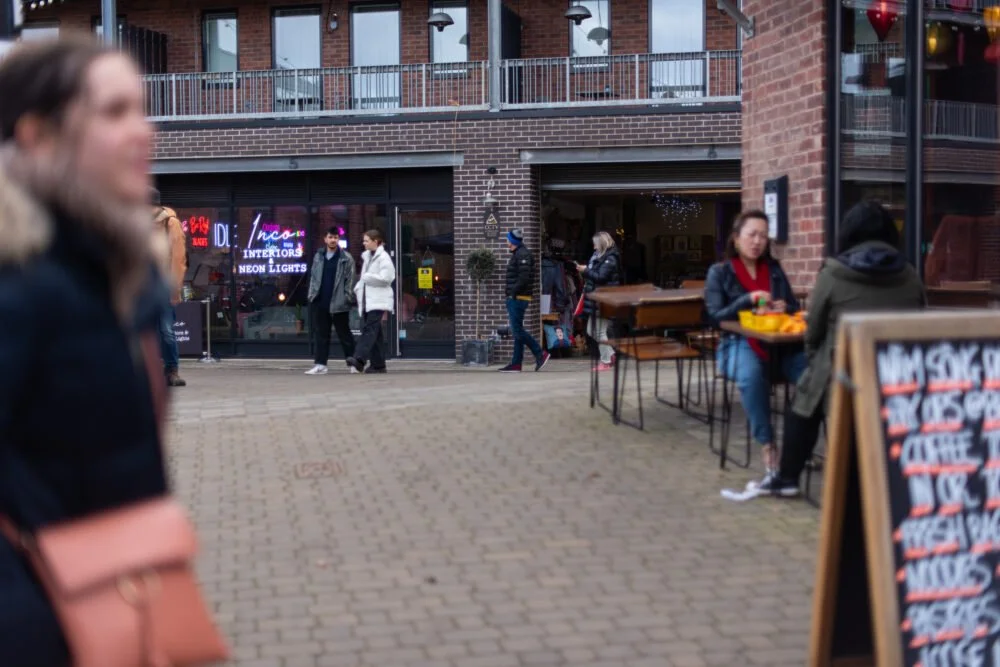
This is where the idea of neighbourhoods as units of transition starts to make sense. Not because everything should be pushed down to that level, but because it’s a scale at which change can be held in a way that connects people, place, difference and decision-making. Where economic, ecological and social questions aren’t separated out, but worked through together. This lends itself to approaches that are multi-solving – they address entangled issues instead of trying to separate them.
Mutual responsibility
Sheffield may be a city of many places, but those places are inextricably linked. What happens in one part of the city doesn’t stay there. The patterns of inequality traced along the 83 bus route are not isolated – they shape the future of the city, its coming generations, and our critical capabilities for resilience amid volatility. There’s a mutual responsibility in that – a recognition that wellbeing isn’t evenly distributed, but it is shared. The conditions for one person to live well are tied, in ways we don’t always see, to the conditions for others.
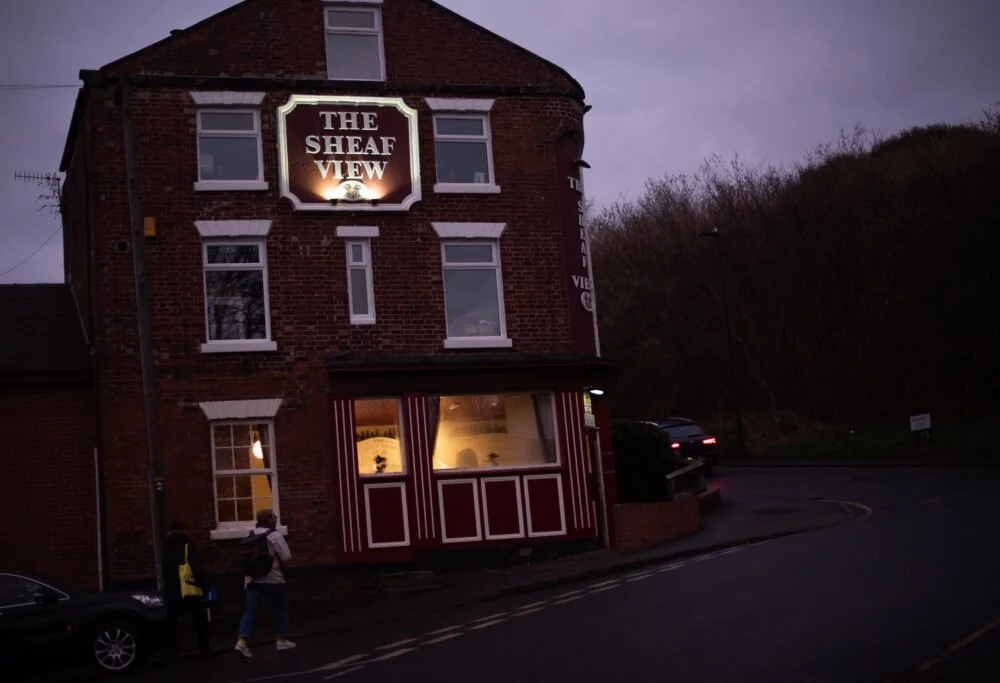
It’s easy, in this space, for the idea of neighbourhood governance to slip into something that looks like mere consultation. An invitation to take part, to sit on a panel or contribute to a conversation. That can be valuable, but without any real influence over decisions or resources, it can also become just a performance of participation.
When trust is already stretched, that carries risk. Because the kinds of degenerative challenges we’re facing now – the overlapping pressures on health, the economy, social relations, the natural ecologies we rely on – are not things that institutions can respond to alone. They require many people to act, to organise, and to shape what happens next. If the spaces that are meant to enable that feel hollow or disconnected from real-life outcomes, it becomes much harder to build the kind of shared effort that this moment in history calls for.
The early signs
Across Sheffield and South Yorkshire, there are already signs of a different approach beginning to take shape as a set of investments, partnerships and experiments that are starting to cluster around place.
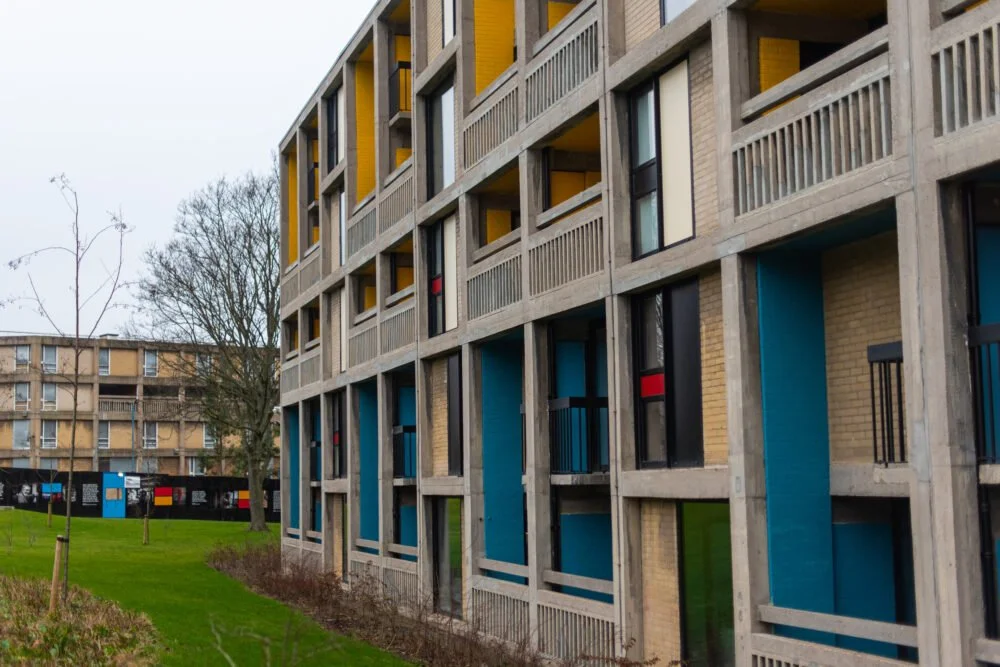
Pride in Place is one of the clearest examples of long-term funding focused on specific parts of the city, with a commitment to backing local priorities over time. The emerging Don Valley corridor is bringing together housing, advanced manufacturing, health and employment. There’s the regeneration work in Gleadless Valley, and the NHS investment in north-east Sheffield, looking at how health outcomes can be improved through more place-based approaches.
These initiatives are all significant. They bring together money, institutions and intent in ways that haven’t always been present before. They are creating the potential for real opportunities to connect growth, health and community life.
But there’s also a question of proximity. Most of them operate at a scale that’s necessarily strategic – large enough to coordinate investment, align partners and deliver outcomes across the city. That scale doesn’t always reach down to the level at which relationships are held day to day – the level where trust is built, where needs are felt most directly, where people have the clearest sense of what could make a difference.
There’s also something implied in how that investment is expected to land. Often it relies on a kind of trickle-down effect – that benefits generated at a strategic level will find their way into people’s lives. But the structures through which that happens are limited. In many cases, it comes down to the individual – through employment, through wages – as the main route by which value flows.
That also shapes the kind of investments that tend to be prioritised – often drawn towards high-growth sectors and large-scale opportunities that can demonstrate returns at the levels that reward investors. These have a role to play, but they often don’t translate into the kinds of everyday resilience that neighbourhoods rely on. The foundational parts of the economy – care, health, food, energy, education, the local conditions that sustain daily life – are less visible in these models, even though they’re where stability and wellbeing are most directly held.
Without stronger forms of governance and economic agency at a neighbourhood level, that flow is very often uneven. Value moves, but it doesn’t settle in the places where it’s most needed, or in ways that reflect the strengths and priorities of those communities. It can pass through neighbourhoods without taking root, and without building the kind of local capability that allows value to be held, reinvested and grown over time.
But what do we actually mean by a neighbourhood?
This brings us back to a simple but surprisingly difficult question.
In Sheffield, when people were invited to map their own neighbourhoods, they didn’t default to the boundaries used by institutions. They drew something more immediate. Places of around four to five thousand people, the scale at which life begins to make sense in a connected way. It’s where you can hold a picture of what’s going on, where you recognise the relationships between people, services, and streets, and where change feels tangible.
When people talk about those places, they don’t describe them as lines on a map. They talk about the park, the row of shops, the main road, the bit of river that runs through. They talk about the school gates, the mosque or the church, the corner where you stop and chat, about who lives where. You get a sense of it being somewhere you can feel your way around – somewhere you know when you’ve left.
That scale shows up in other ways too. A lot of community organisations naturally work with similar population sizes, because that’s where relationships can be held properly. The neighbourhood mapping work in Sheffield landed in a similar place – 147 neighbourhoods, each roughly that size. If you look elsewhere, you’ll see versions of the same thing. In Iceland, local governance sits with municipalities that often serve populations of around 4 to 5,000, with real responsibility for services and decision-making. There’s something consistent in that: a sense that this is a size at which people can know what’s going on, take part and make things happen together, especially with the growing availability of technologies to support this.
Some issues sit more naturally at a larger scale. Transport and mobility, parts of the health system, economic coordination across the city – these need to be held across wider geographies. Other decisions are better made at ward level or through Sheffield’s existing Local Area Committees (70–80,000 people), where there’s enough scope to coordinate across neighbourhoods. What if LACs were spaces where self-initiated neighbourhood groups gathered to share learning?
The point is not to fix on a single scale or on artificial boundaries, but to be more deliberate about which kinds of opportunities and agency sit where, and how those layers connect. Today, that alignment is often missing, and there are vacuums. The places where people experience problems most directly are not always the places where decisions are made or resources flow. And there’s a question of ambition. If neighbourhoods are only ever invited into conversations about litter or graffiti, we miss the much bigger role they could play. This moment asks neighbourhoods to respond to overlapping pressures, to build resilience, to shape how change happens in the places where it’s felt most acutely.
That means recognising everybody not as customers or service users, but as citizens with ideas, relationships and the ability to act. It means creating the conditions for neighbourhoods to commission, develop and guide new approaches to care and enterprise, to shape local economies in ways that keep value and relationships circulating locally. It means equipping neighbourhoods with the capacity, capability and confidence to take on that role together as a core part of how Sheffield responds to the challenges it faces.
Part of that is about how decisions are made, who’s involved, how information is shared and how accountability works. But part of it’s also about economics – about whether there’s any real ability to influence how resources are used, what gets invested in, and what gets built or supported over time.
Something is possible here
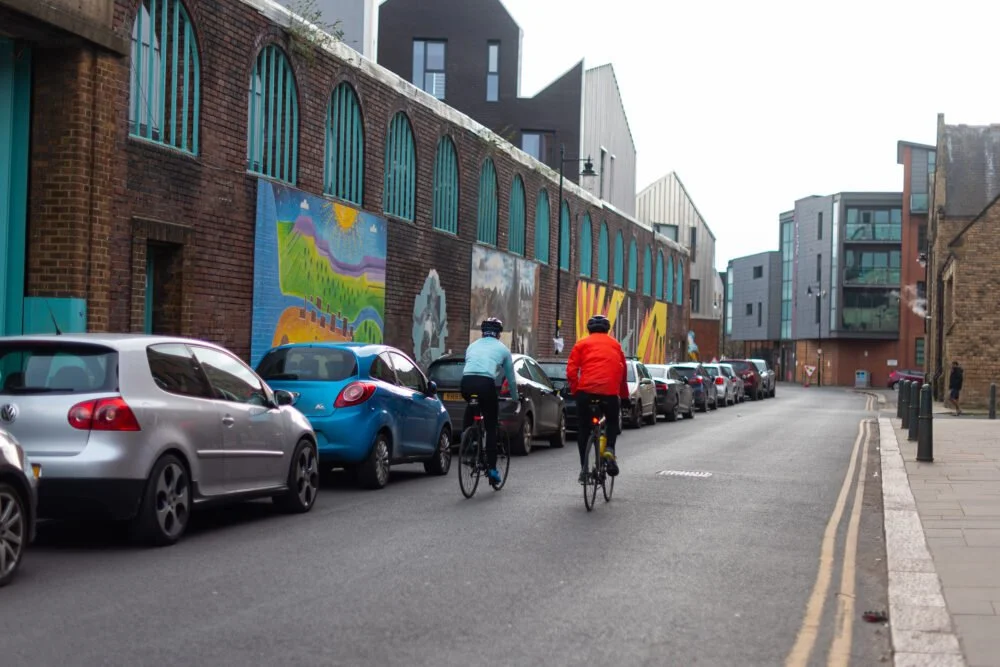
Fortunately we’re not starting from scratch. The City Goals, and the emerging neighbourhood conversations and investment and demonstrator work happening alongside them, are early pieces of a wider civic infrastructure. They’re a set of connected efforts that, if aligned, could support a very different way of working – one in which neighbourhoods are not just sites of delivery, but have real economic power, real governance and real agency to make decisions over how resources flow in their places, actively shaping the city’s future together.
There’s a sense that something might be possible here, even if it’s not fully formed yet.
Across Sheffield, there are people and organisations already starting to think this through in more detail. Community groups, financial institutions, civic actors, system thinkers, people working within and alongside public services – all bringing different kinds of knowledge, experience and capability. There’s a growing sense that, if some of these pieces were brought together in the right way, something more coherent could take shape.
This piece has been about setting some of the context for that – the conditions we’re in, the gaps that are becoming more visible, and some of the reasons why neighbourhoods are coming back into focus. But it only really scratches the surface of what this could look like in practice.
Less of a conclusion and more of an invitation…
What does this bring up for you? What feels possible here that didn’t before? What would need to be in place for this to work and what might get in the way? Where are the risks and how might they be navigated? What’s already happening that could be built on?
We’ll follow this with further pieces that go deeper into the detail – exploring what a neighbourhood-based system of governance and economic agency might actually look like in Sheffield, how it could function, and how some of the elements already in motion might connect. A set of ideas to test, challenge and develop together in the open.
Because if this is going to work, it won’t be designed in isolation. It will take shape and change through conversation, experimentation and people choosing to take part. It will need to be open enough to hold the different ways people and places want to approach this, while still keeping a sense of critical connection across the city.
This piece sits within a wider field of shared inquiry and inherited labour. It has been shaped through many conversations, collaborations, communities and lineages. Some threads can be pointed to directly, others sit more quietly in the background — woven through systems practice, civic work, Indigenous and decolonial critique, relational thinking and place-based experimentation. The ideas here are not offered as original or proprietary, and any clarity that appears should be understood less as authorship and more as participation.
This piece has also been shaped through a process that brings together different forms of thinking and making. It draws from lived experience, dialogue, voice notes, transcripts and collaborative editing, alongside the use of language tools including ChatGPT, to support clarity, flow and accessibility. These tools have been used to help surface and express thinking, not to generate ideas or analyse primary material.
It’s offered here as part of an ongoing collective attempt to understand and respond to the conditions we find ourselves in.