

What next for the UBI Lab Network?
As our Basic Income campaign nears its ten-year anniversary, we look at what the future holds for a project turbocharged by the pandemic.
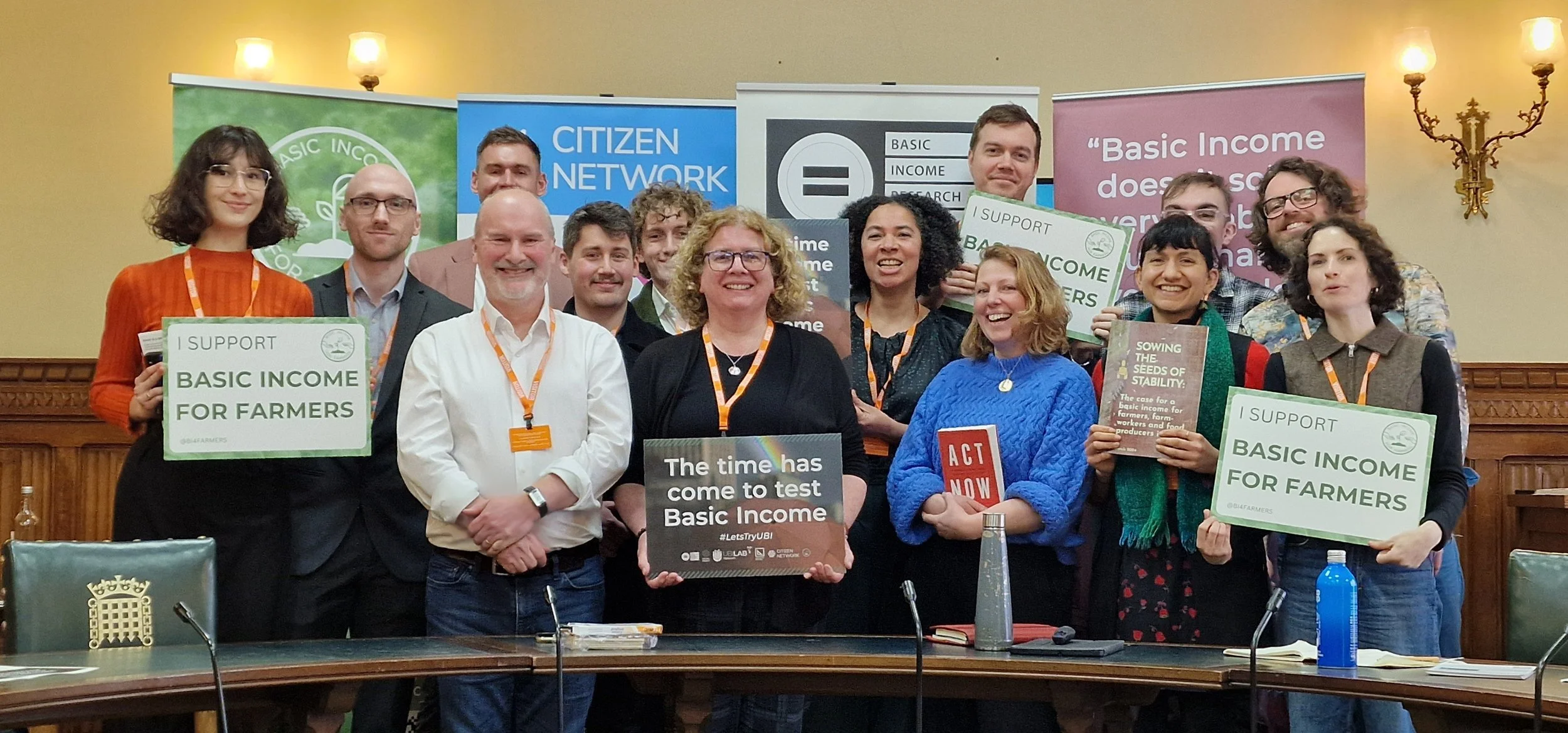
Members of the UBI Lab Network with fellow basic income campaigners in Parliament.
The UBI Lab Network emerged out of Sheffield in the mid-2010s, through a series of Festival of Debate events and informal conversations that brought together activists, academics and citizens grappling with poverty, precarity and the limits of existing welfare systems.
Universal Basic Income, or UBI, stood out not as a silver bullet, but as one of the few ideas that questioned the fundamentals of anti-poverty policy.
From the beginning UBI Labs were deliberately framed as experimental spaces, and focusing on learning and testing made it easier for us to engage with MPs and councillors without demanding an ideological commitment.
What followed exceeded expectations: Sheffield and Liverpool became early centres of activity, and we developed sophisticated pilot proposals. 34 council motions were passed across the country (including most recently in Bristol), and over time the network grew to dozens of place-based and thematic labs across the UK and internationally, from Leeds and Norwich to Kenya and Jakarta.
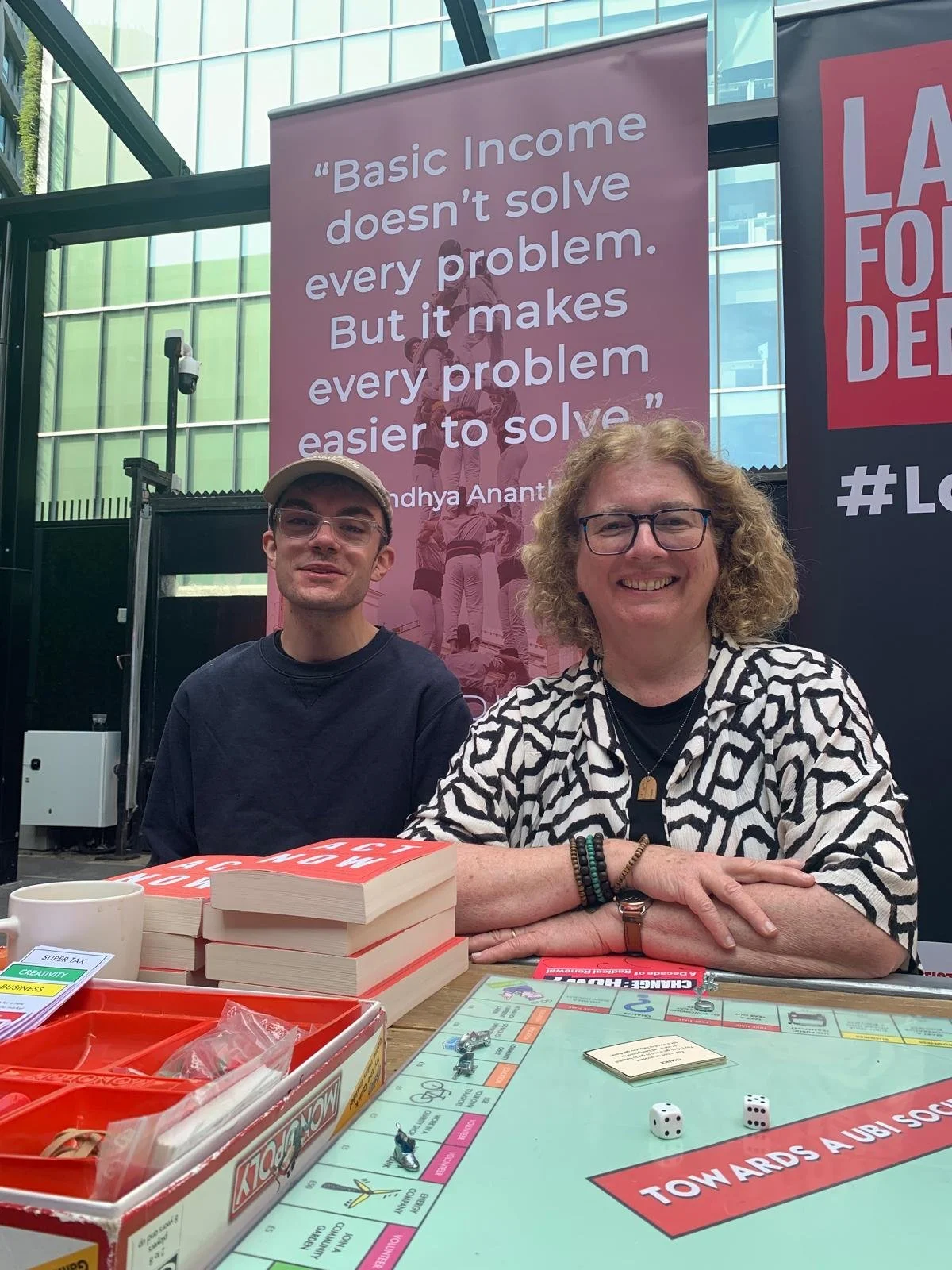
Alongside this growth came some impressive outcomes: sustained cross-party engagement, national and devolved election pledge campaigns, and ultimately the Welsh Basic Income pilot for care leavers – one of the most significant UBI experiments globally.
Since 2017, our 20 citizen-led Labs have:
Successfully campaigned and helped implement the first-ever UK trial of Basic Income, which the Welsh Government launched in 2022 with young care leavers
Run non-partisan election campaigns in all four nations, with hundreds of election candidates committing to support Basic Income pilots
Organised a letter to then-Prime Minister Rishi Sunak, signed by 285 politicians, campaigners, academics and civil society leaders
Created an interactive map showcasing more than 17,000 stories as to why the UK needs a UBI
Co-created pilot proposals for Manchester (to address youth homelessness) and Liverpool (for musicians), working with Northumbria University
Designed a ‘Peace Dividend’ pilot for Northern Ireland
Developed a ‘UBI Plus’ model looking at the additional needs of people with disabilities, working with Citizen Network
Hosted ‘Basic Income and Regrowth’ briefings for MPs, bringing together experts on farming, health, citizenship, environment and work.
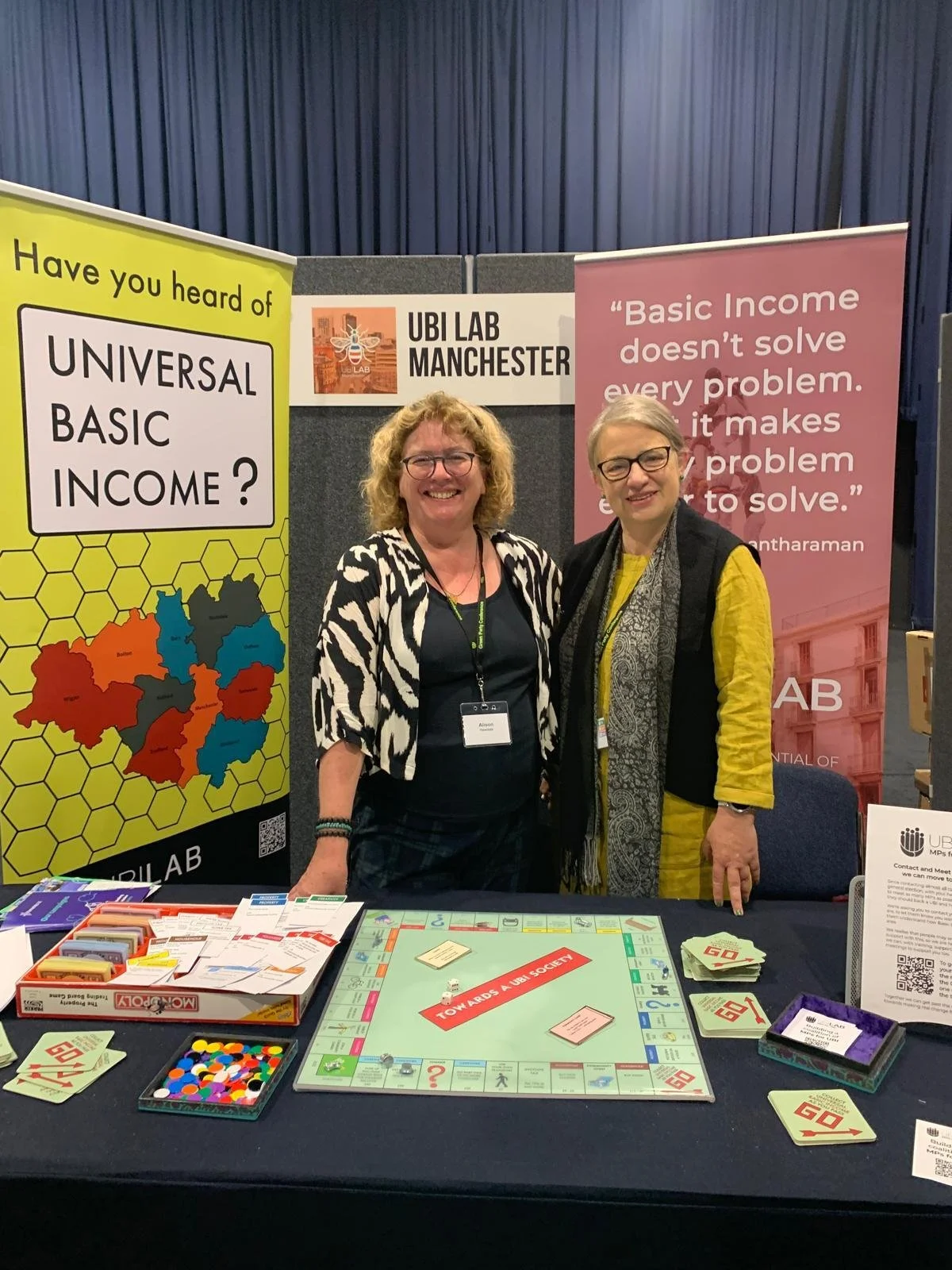
Created a boardgame to showcase the transformative impact of a UBI in an engaging and accessible way
But this work was never the product of a big organisation. It relied on a small number of people, lots of voluntary effort, and Opus’s willingness to host and convene (a huge thank you to Alison Hawdale, Louis Strappazzon, Ani Stafford-Townsend, Patrick Brown, Jonathan Williams, Reinhard Huss, Simon Duffy and many others who took leading roles in the actions above, as well as the team at Opus: Tchiyiwe Chihana, James Lock, Jonny Douglas, Sam Walby, Sara Hill and Sam Gregory). The network operated as an engine room: supporting narrative and media work, connecting policy-makers to lived experience, and turning ideas into actions.
During the pandemic, the network picked up a lot of momentum, connecting elected representatives, campaigners, artists, academics and communities in real-time. Actions, alliances and proposals came together in days rather than months. UBI shifted from a fringe idea to a mainstream policy consideration – not because we ‘won’, but because our work, alongside many others, shifted the Overton Window in the context of the crisis.
Where is the network now?
The UBI Lab Network is no longer in its pandemic-era phase of rapid growth and high intensity. Energy has declined, many contributors have moved on to other responsibilities, and funding has been inconsistent. In addition, our capacity to coordinate the network here at Opus has reduced.
Special thanks must go to Louis and Alison, co-chairs of UBI Lab Manchester and two long-time members and organisers within the UBI Lab Network, who have done heroic work over the past few months to keep up momentum within the network and push forward our work on the ground.
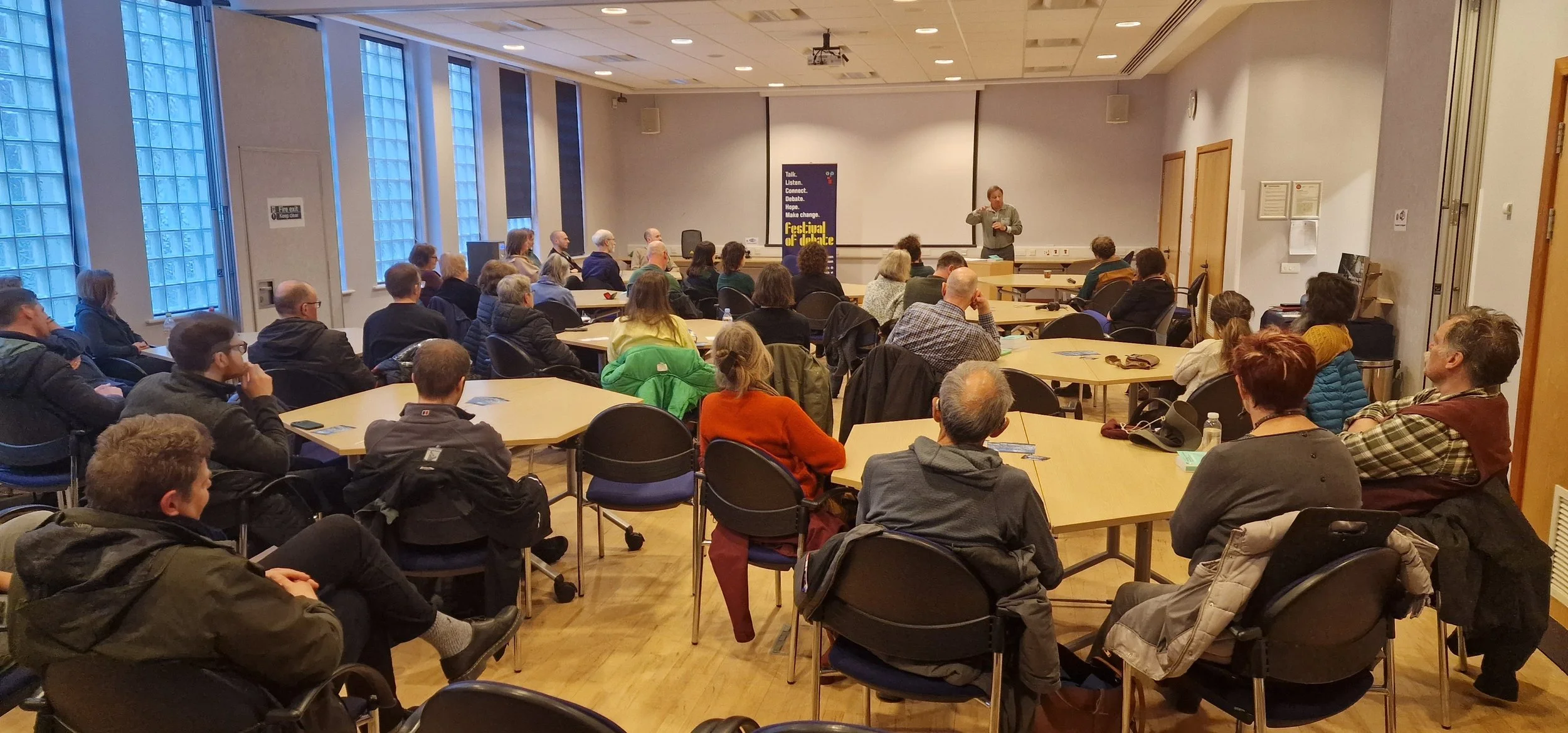
Basic Income expert Guy Standing speaking at a UBI Lab Network event.
This is not a story of failure. It is a network moving out of an extraordinary moment and into a more ambiguous one. There are a couple of dynamics at play:
Acceleration triggered by the pandemic created a ‘leap’ that might otherwise have taken a decade, followed by inevitable burnout
The delivery of the Welsh pilot, while a major success, introduced a pause elsewhere as attention shifted to ‘waiting for results’
Wider capacity across the UBI ecosystem has thinned as focus, funding and belief have been stretched by multiple, compounding crises
The risk at this stage is not collapse, but quiet attrition: the gradual erosion of infrastructure, relationships and institutional memory because expectations and resourcing have not been reset for a new phase of the UBI Lab Network.
Opus’s role is central here. Historically, Opus has acted as steward rather than owner, holding administrative capacity while allowing the network to remain decentralised and member-led. That role now needs to be consciously revisited rather than implicitly continued or withdrawn.
Why the UBI Lab Network still matters to Opus
It’s important to recognise that the UBI Lab Network has already shaped Opus itself. It acted as a catalyst in Opus’s transition from a primarily Sheffield-based organisation to one operating confidently nationally and internationally.
Through UBI Lab, Opus developed capabilities in lobbying, cross-party engagement, partnership building, movement infrastructure, and network co-ordination. It opened up relationships with politicians, civil servants, national media, academics, artists and lived-experience leaders that would not otherwise have emerged.
UBI Lab also opened up new funding relationships, including with Lankelly Chase, putting Opus on a path toward core funding and long-term institutional backing that continues to sustain us. The value generated was therefore not only relational and reputational, but structural.
In this sense, UBI Lab was not simply a hosted project. It expanded Opus’s horizons and strengthened our ability to steward distributed networks, operate in policy spaces, and hold ambitious transition conversations beyond South Yorkshire. That learning is now part of our DNA.
Opus’s mission is to support upstream, systemic responses to complex social challenges. Across our work, we invest in platforms, networks and cultural infrastructure that enable participation in change. Seen through this lens, the UBI Lab Network is not just a policy network. It is a transition infrastructure.
UBI Lab frames Universal Basic Income as an enabling condition for overlapping transitions: economic, social, democratic, wellbeing-related and ecological. UBI is not seen as something that ‘solves’ these crises, but as a way of increasing our collective capacity to respond to them: reducing fear, freeing up time and attention, and allowing people and institutions to act.
Unlike other social security reforms, its universality and unconditionality creates new civic, economic and governance capacities by shifting the frame of what is valuable and who is valued. We will need this to meet the challenges ahead, which are going to be informed by both polycrisis (compounding entangled issues) and permacrisis (continuous crisis).
UBI’s lack of means-testing and conditionality also make it a model that’s more easily adaptable to crises as they manifest across different parts of society and economic sectors, improving our collective resilience. It's the only policy proposal that stands a chance of eradicating absolute poverty outright as well as meeting the workforce implications of exponential technologies like Artificial General Intelligence and machine learning.
All of this closely mirrors Opus’s own theory of change. Both prioritise participation, capability and long-term transformation over short-term fixes. Both recognise that resilience depends on protecting and growing our collective abilities to organise, imagine and intervene.
From this perspective, the value of UBI Lab lies less in constant activity and more in what it makes possible. It is a relational, narrative and political infrastructure that can be activated when conditions are right. Allowing that infrastructure to quietly disappear would be a loss not only to the UBI movement, but to the wider ecosystem of transition work that Opus is a part of.
The success of the first phase of the UBI Lab Network was sealed during the pandemic, when we rapidly mobilised at scale to respond to an unprecedented crisis that brought the economy to a standstill almost overnight.

But we are now facing a succession of bigger and deeper crises in the near future, ranging from inflationary shocks to ever-increasing instability in the global food system. In addition, the rise of AI is kickstarting a seismic shift in the job market – and this time, the change will be permanent.
We believe it’s vital that, when this crisis begins to bite, the UBI Lab Network is in a position to respond, so that we can propose imaginative and radical interventions when they are most urgently needed.
Some future ways forward for the network
Rather than a single direction of travel, the most realistic future for the UBI Lab Network lies in three new directions, each reinforcing the others without recreating unsustainable intensity.
1. Minimum viable stewardship
Maintaining the basic infrastructure of the network: website, light communications, occasional convening, informal relationship-holding. This treats UBI Lab as a commons – preserving legitimacy, memory and connectivity without over-programming or centralising control.
2. Re-rooting in Sheffield
Returning to the network’s origins by grounding activity once again in place, lived experience and culture. This could include community-based conversations, arts-led engagement, and practical explorations of what income security makes possible in everyday life. The emphasis here is on doing something tangible that can inspire others, as the network originally did.
3. Strategic political support and campaigns (Greater Manchester)
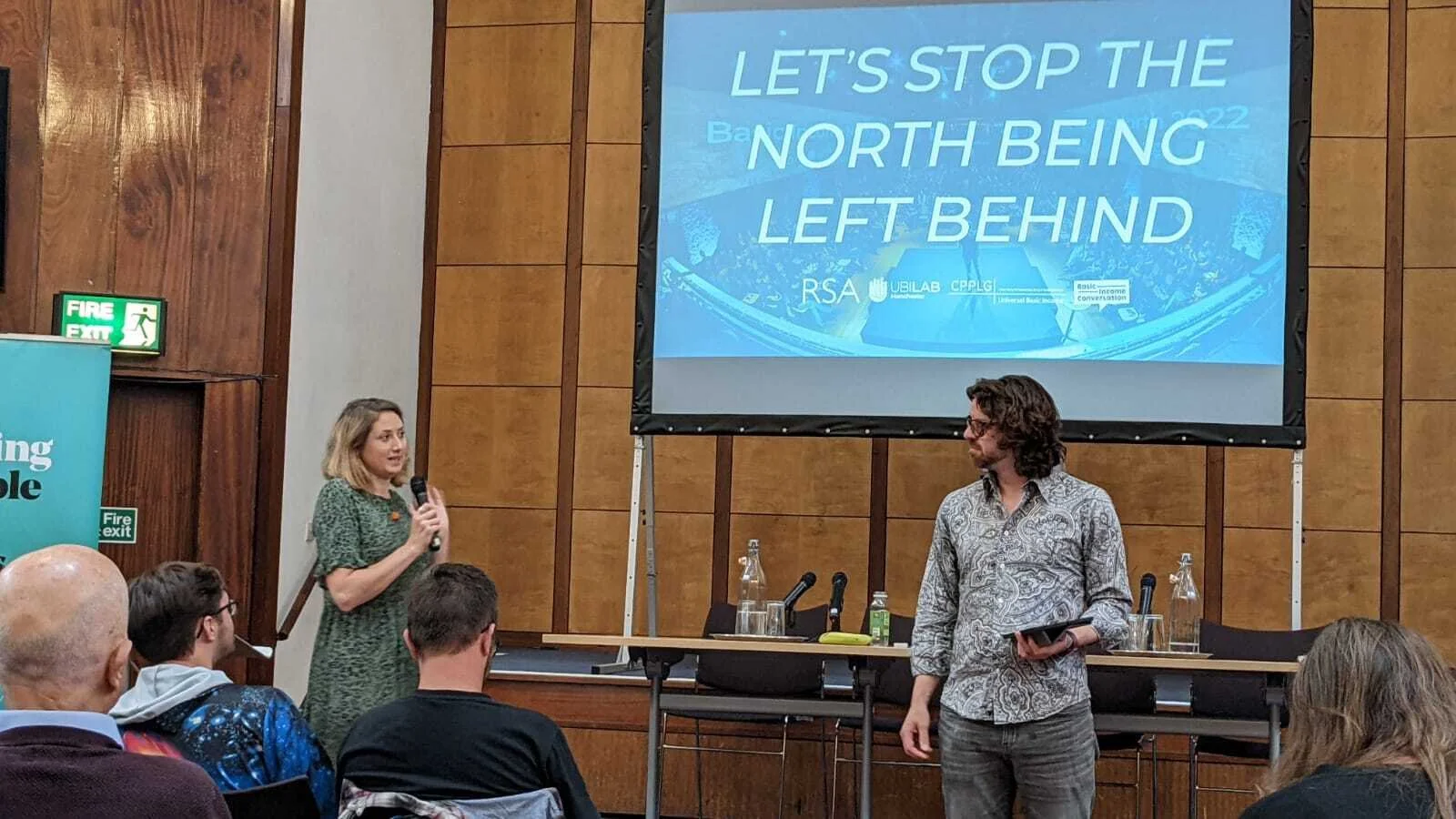
A limited, time-sensitive project responding to Andy Burnham’s public commitment to explore a basic income pilot. UBI Lab Manchester is already a named partner in the GMCA’s ‘Live Well Basic Income Pilot’ design process, alongside academics and civil society partners. UBI Lab’s role here would be to convene across civil society, research and lived experience, and help translate design work into concrete political commitments.
A stewardship choice
Importantly, these pathways do not require a return to pandemic-era levels of activity or resourcing. They are designed to be light-touch, bounded and realistic. The core choice for Opus is not whether to ‘save’ the UBI Lab Network, but whether we wish to continue stewarding transition infrastructure – and if so, how intentionally and at what scale. The UBI Lab Network represents a body of relational, political and cultural work that cannot be easily recreated. It holds trust, memory, capability and legitimacy built over nearly a decade.
The question now is not whether it returns to its previous intensity, but whether it is consciously stewarded, proportionately resourced and strategically positioned for the next phase of social, ecological and economic transition.