
As the magazine prepares for a return to print, we look back at its evolution over nearly two decades with two of the people who were there from the beginning.
Our Sheffield-based community media platform, Now Then, recently announced long-awaited plans to return to print later this year. Here on the Opus Blog, we thought we’d look back at the history of the magazine with two of the people who were there from the start (or near enough): magazine editor-in-chief Sam Walby and long-time Opus director and writer Sara Hill.
In part one I spoke to Sam and Sara about how Now Then got started and in part two, we explore how the magazine evolved over its first twelve years in print. In the last instalment we’ll explore the exciting plans to relaunch the print edition later this year.
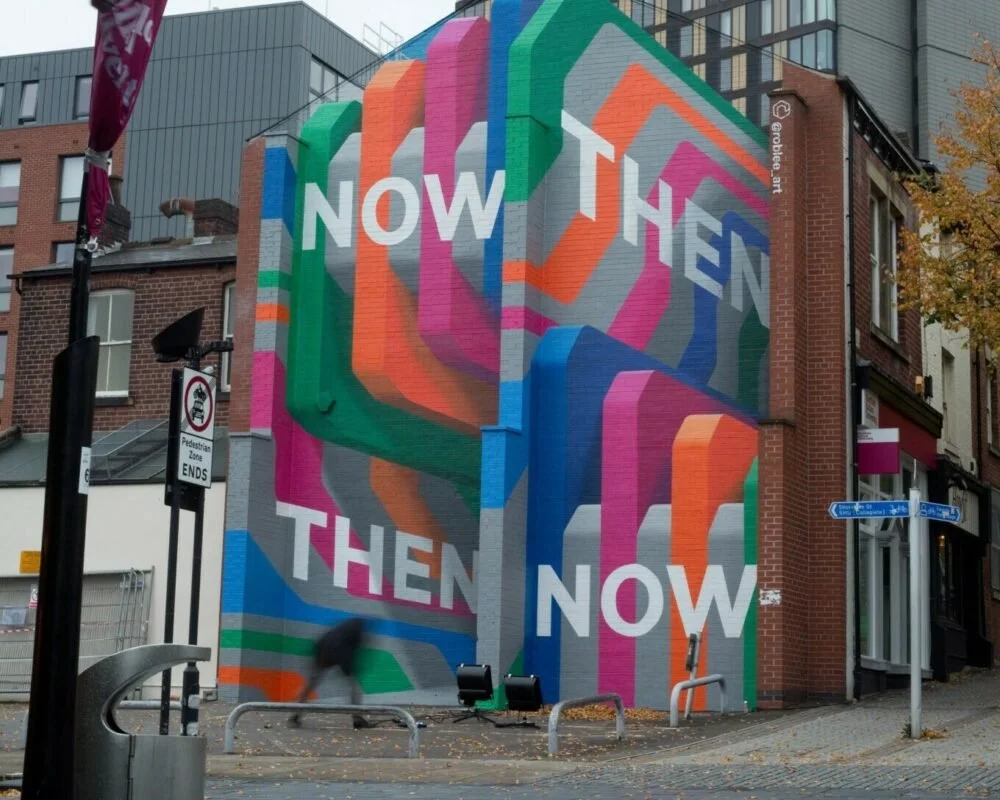
Credit: Andy Brown Photography
How did you see the magazine evolve over the first twelve years it was in print?
Sara: I think the biggest evolution was in terms of quality. Partly that's just time and experience, but that allowed us to become a bit more established as a platform in the city. So we had more artists and writers who wanted to work with us, which then gave us a bigger pool to choose from, and that automatically ups the quality of the things that you pick out of that pool.
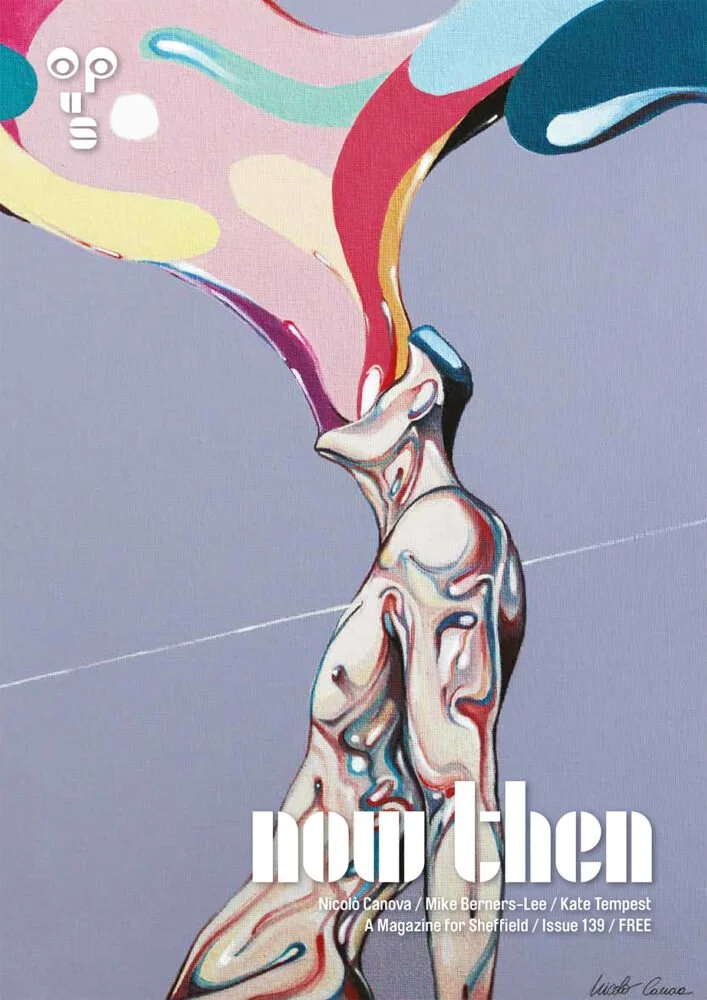
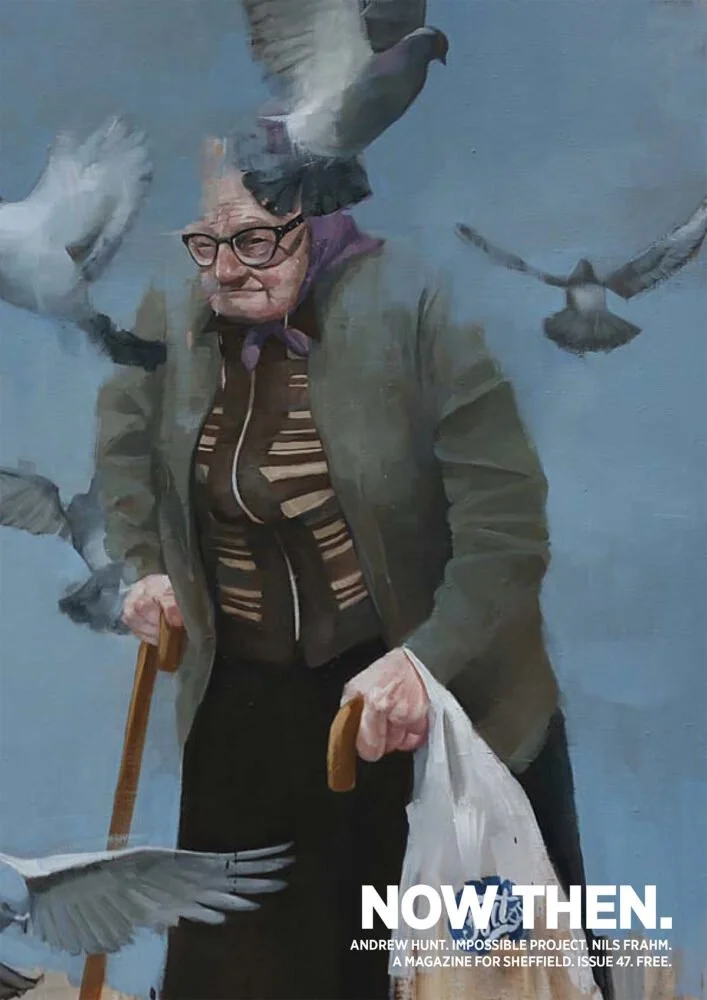
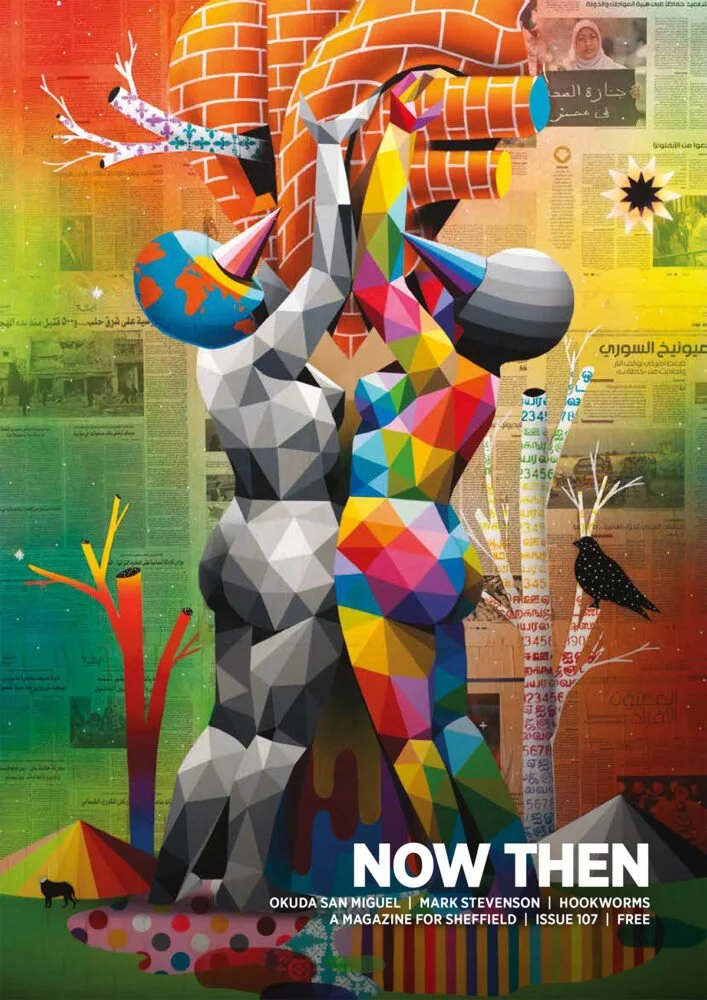
We were always really conscious of the artistic side of it, and of really doing justice to the artwork, because the artwork that we printed was donated for free. That was always really important to us. That had a knock-on effect in how the physical product evolved, in terms of paper stock, print quality and the ink that we used. There's no point in my life that I thought I would ever spend hours upon hours looking at print and paper samples and feeling paper stock and taking decisions like that incredibly seriously! But that is what we did. The reason we did that was because we wanted to handle this artwork with care, and we wanted to make sure that the audience for that artwork, the people who were picking up the magazine and reading it, experienced it in the way that the artist would want them to.
There's a huge amount of trust from an artist to a publisher in that relationship. Because once you've handed over your digital art files, you have to trust the people that you're giving it to – you have to trust that they can work with the printer and so on and so forth. I think having Phlegm onboard [for issue #1] really helped. Having that trust from someone like him early on was really helpful. I know that his stuff is all over the world, but for me he's just so intrinsically Sheffield that my brain doesn't quite compute.
How did the more ‘ziney’ approach of the first couple of magazines evolve over time?
Sam: We didn't do loads of market research about potential readership, or who wanted this magazine. We just went ‘we want this magazine’. So from a reader standpoint, we probably started from a kind of ground zero. The first few magazines, we only printed a couple of thousand copies, compared to later years when it was 8 to 10,000 copies. Our distribution was basically going out in a car and putting it in cafes and pubs, and being quite selective, because there weren't many copies.
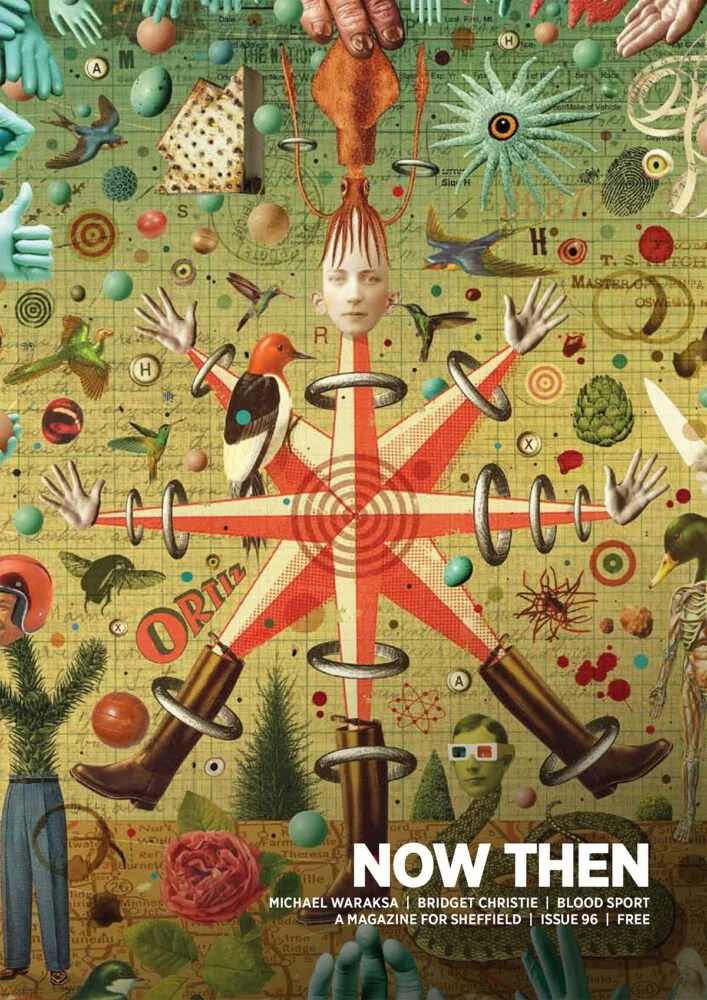
So I guess it was underground by definition. From an advertiser standpoint, among the local businesses who were enabling us to actually do the magazine, there was an increasing confidence and buy-in from them. There was real value in it, and they wanted to be associated with it. We had to produce a little mock-up version of the magazine to be like, ‘this is what it would look like’. Some people were like, come back to me in a few months, and let's see how you get on – let's see if you're still here. There was a bit of a snowball effect to that, which then fed into greater production values.
The lines blurred between people who were reading the mag and those who wanted to contribute, and there was increasing interest from advertisers and people who could fund what we were doing. And I was getting a bit more savvy and experimenting, trying out new stuff, whether that's the way we were approaching what we put in the magazine or the graphic design.
Each year we tended to do a bit of a review of how we were designing the mag, and that obviously would have lots of implications for word count, imagery and the featured art we put in. So there was that constant revising of what it was and what it looked like, and there were many iterations of that across the two people who designed the mag.
How did the business model develop over time, especially in the context of only working with independent small businesses?
Sam: There were some major challenges to that model, where we were offered significant amounts of money from bigger brands or whatever, which we turned down. But there was also some softening of the way we looked at who we would take advertising and support from.
So that was a principle right from the start, of only taking advertising from independents?
Sam: Pretty much, yeah, and charities. We broadened that to local government, where it was something that we saw as having good social value. I don't know that the model changed that much really – it was a question of scale. In retrospect, with the kind of organisation we were becoming and the kind of skillsets we were developing, there was a mismatch between purely an advertising model and the kinds of things we were interested in, the kinds of conversations and collaborations we were getting into. It didn't necessarily change dramatically, but evolved a bit over the years, and there were some situations where we had to come back to the question of our ethical framework.
Was it tricky to balance those principles with actually getting the thing to wash its face?
Sara: It was really hard. And we had a lot of very long late night conversations about exactly why we were making this so hard for ourselves, essentially, by putting all these boundaries in place about who we would and wouldn’t work with, and constantly thinking about them over and over again.
I can't remember what year it was, definitely within the first five years, where we actually got offered three or four grand from Guinness to do a centrefold advert for them. The centre of the magazine always used to be a pull-out poster of the artist. So not only would we have had to compromise the advertising criteria, but we would have had to compromise the platform we offered to artists as well.
A third of the magazine [page count] was adverts to pay for it, a third of the magazine was art, and the other third was written content. So that felt like such a huge compromise, and at the time I don't think any of us were getting paid – maybe by that point, we were paying ourselves £50 quid a month or something. We turned it down.
We did have a long discussion, but it was pretty clear cut as well. I think we all started from a position of, I don't think we want to do this, and I don't think we can do this, and I think it would be too much of a compromise, but let's talk about it. Because we need to be really sure. At the time that was practically a whole month's worth of printing in one advert. So it was a really big deal to turn it down. I think we made the right decision, but I probably wouldn't be saying that if we'd gone bust a couple of months afterwards! But we didn't.
Even in the time I was involved, since 2015, we must have gone through two or three versions of our ethical framework for advertisers.
Sam: When you talk about ‘independent business’ or ‘local business’, they're all quite subjective terms. So we tried to drill down into how we defined those things, but often it was a case-by-case basis as to who we would be willing to work with and take money from to fund the magazine.
Those are all things that we got into the weeds on. There's a different parallel universe where we continued to do a printed magazine with exactly the same model, but I think it's a question of what we're now interested in as an organisation, and the skills that we've developed.
The kinds of colleagues who want to join us in our mission don't tend to be people who have a very commercially-minded approach, and who would have the ‘sales mindset’ in quite the same way. But we're also fortunate that the people who did do that work at Opus have applied those same relationship building skills and all those really important ‘soft skills’ in different places now, of course.
Is it possible to get briefly into the specifics of how much it cost to produce each month, how much we needed to raise in advertising, and how that was achieved?
Sam: In the early days, really the only person who was being paid was the graphic designer. And then we managed to build that up a bit – when I came on to actually work at Opus on the payroll, that was on 2.5 days a week. I was being paid for that time, but not really from the Now Then budget. So spending some time on Now Then, developing it, quite a lot of time on grant funding, and on other stuff that felt important, particularly from an income perspective in those early days.
It's quite hard to cast my mind back to how much it cost to produce the mag in those early days. At the point when we stopped it just as Covid hit, we were needing to raise about £10,000 a month. We were doing nine magazines a year, so between £90,000 and £100,000 every year, probably 90% of that from advertising. It was very rare that we were making a surplus – we were really plowing most of the money into production costs, and we weren't paying ourselves particularly well.
We weren't very savvy with a lot of that stuff, but we managed to make it work on a month-by-month basis. There would have been a lot of risk and vulnerability if the magazine was the only thing we were working on. But I don't think that was ever the intention, because Opus started out as an events collective.
So we were always going to be running events, and that morphed a bit further down the line into running events which were a bit more about local social, economic, political issues and a bit less about arts and culture.
Quite early on as well, we had people coming to us, initially other promoters, saying, ‘you've built a distribution network, because you produce your own magazine and you distribute it. Can you do that for us and we'll pay you?’ And that was the start of the distribution service. So it was always going to be an entanglement of a lot of different things we were doing, and I think there was always a recognition that the mag was an important ‘shop front’ for Opus as a whole.
Do you have any favourite pieces or favourite moments over that time?
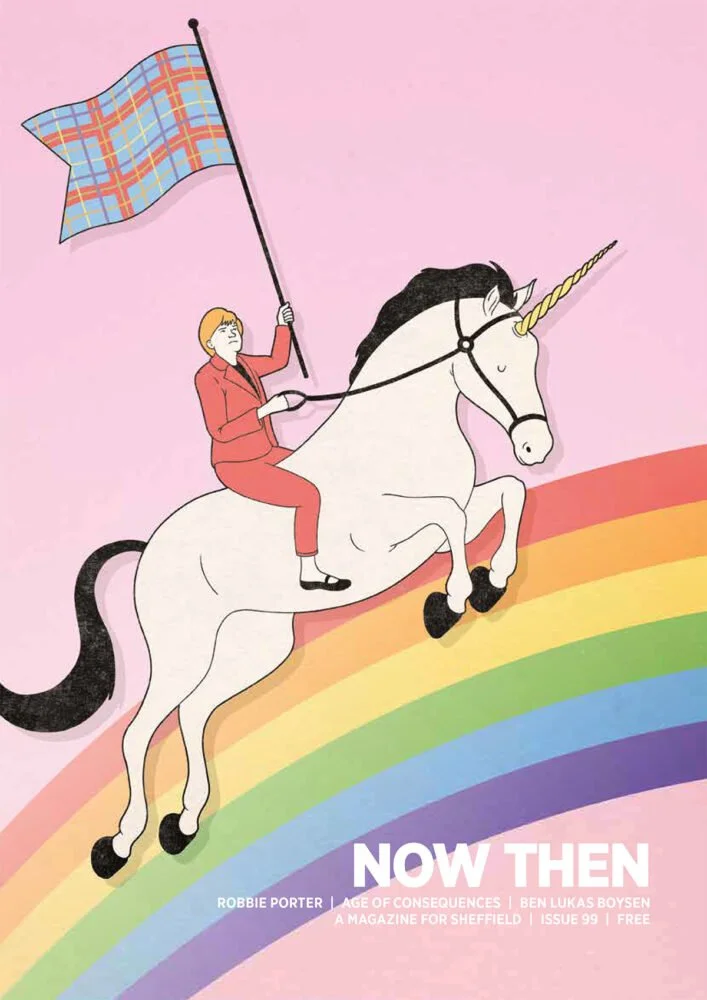
Sara: I think one of my favorite front covers we ever did was Nicola Sturgeon riding on a unicorn. I loved that piece – it was somehow silly and smart. That was a particular favourite of mine, I did really love that one. There was a lot of tie-in stuff that I was really proud of – a lot of the gigs we did that really felt like they brought people together. We did an event series of ‘Now Then Presents’, and we had musicians that had featured in the magazine.
It was just so wonderful to see people together in a physical space – I miss doing gigs! It was just a lovely way to have that community of interest which was based around the magazine.
In the final part, we’ll look at Now Then’s upcoming return to print in 2026.