

Illustrating the Story Commons lesson cards
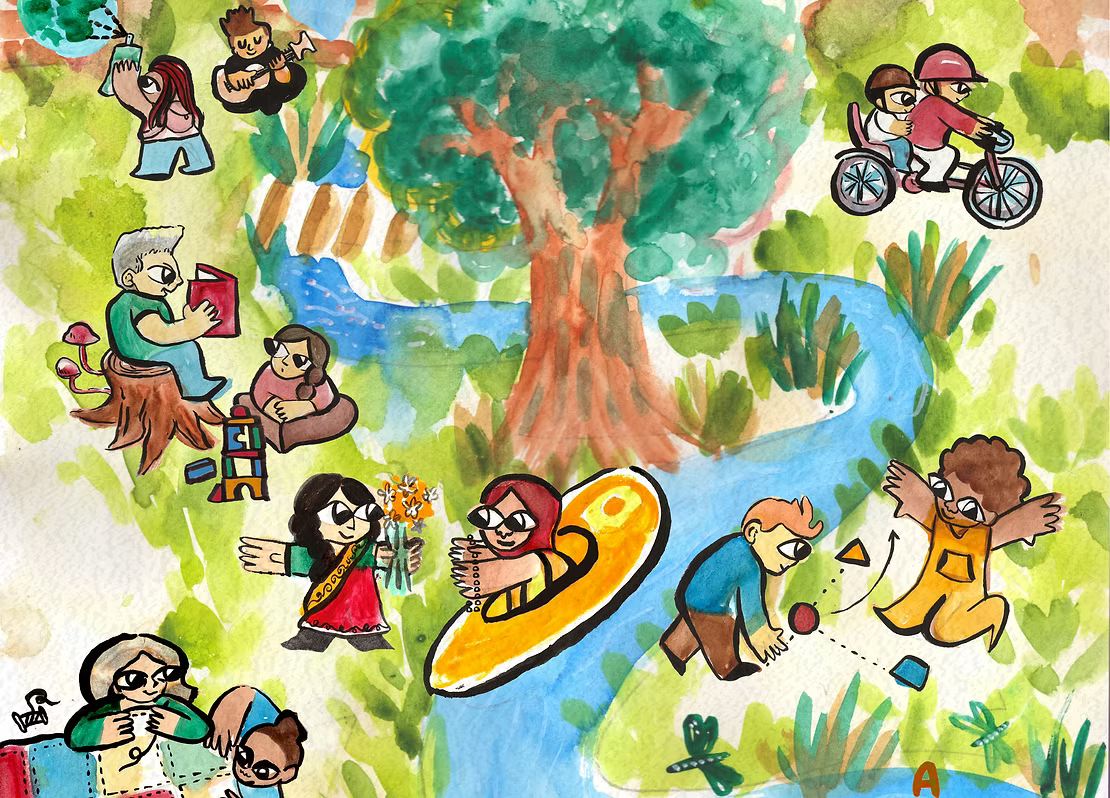
Illustrations by Charlotte Bailey
This piece accompanies our ’Lessons for a Story Commons’ series. These lessons emerged from a group of creatives who gathered to share examples and prompts for shifting the way we tell stories.
When the People’s Newsroom were planning the Story Commons series, we knew we wanted accompanying visuals that could help express some of the parts of this work that are hard to put into words. Charlotte Bailey was part of the cohort who helped us develop the lessons, and also worked with us to illustrate the series. She describes her process and some stories behind the illustration above.
The process of creating the illustration
1. The tools
Ink and brush are my chosen tools. They save on the use of disposable plastic brush pens, but also I love the mindset required to illustrate in brush and ink. There’s a playfulness and confidence you have to adopt to claim the page, accepting the risks and the ‘mistakes’ that come with using a material that can’t be erased or undone.
2. Grounding
The first thing I did was re-familiarise myself with the lessons, with pencil, highlighter and Post-Its to hand. I highlighted and annotated key words, sometimes with little thumbnails, as I went along.
All I was really doing was generating rough ideas of what I could do. Some of the concepts had a myriad of possible interpretations, so I didn’t want to commit to anything before we’d had a chance to talk about it together.
3. Rediscovery
Some of the lessons were quite abstract, and didn’t translate easily into illustrations, so gathering our collective thoughts, feelings and visual associations was a useful starting point to discover what we meant by concepts like ‘accountability’ or ‘value’.
I set up a virtual whiteboard to gather the visuals that came to mind for all of us – essentially a co-created mood board
We went through each of the seven lessons for the Story Commons, and this part of the process was wonderfully generative, creating a wealth of possible visualisations.
4. Gathering
From this co-design session I got a clearer sense of what the final piece could be. From the visualisations and references shared on the mood board, I gathered the ones that I felt communicated the lessons for a Storytelling Commons in the clearest, most interconnected way.
5. Making and Building
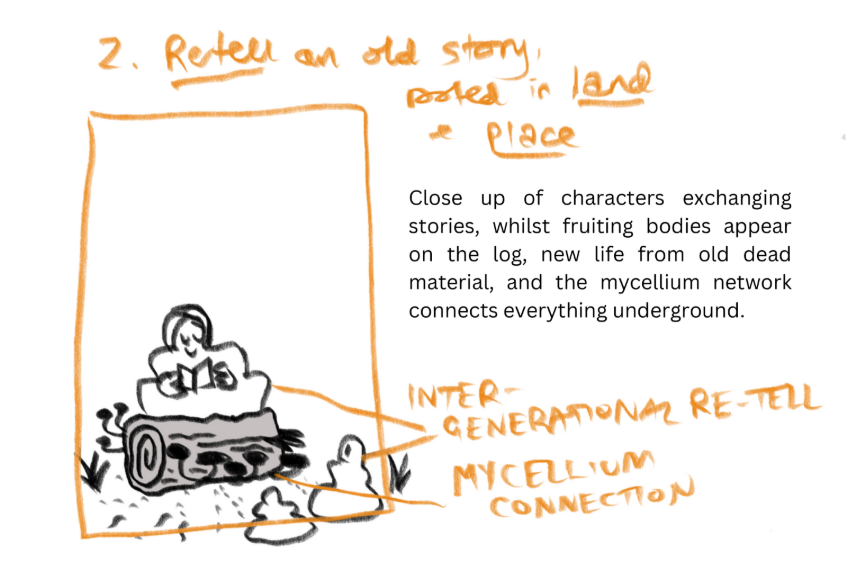
I started synthesising the ideas we gathered as a team into rough drafts for each lesson card, and added annotations so that the team could see my thinking.
I sent multiple versions of the drafts to keep a record of the process, experimenting in the open to get feedback as I went and to empower us to think creatively together at this early stage.
6. Crafting
A key question in the design process was what the focal point of each illustration would be. The final piece needed to be clear and usable by the different people who would interact with it, in line with open-source principles. We knew we wanted a scene that could hold the different concepts from the lesson cards, with the option to ‘zoom in’ on each one. In the end, we chose characters engaging with activities, artefacts and a landscape that best symbolised each concept, gathered around a tree in an urban landscape.
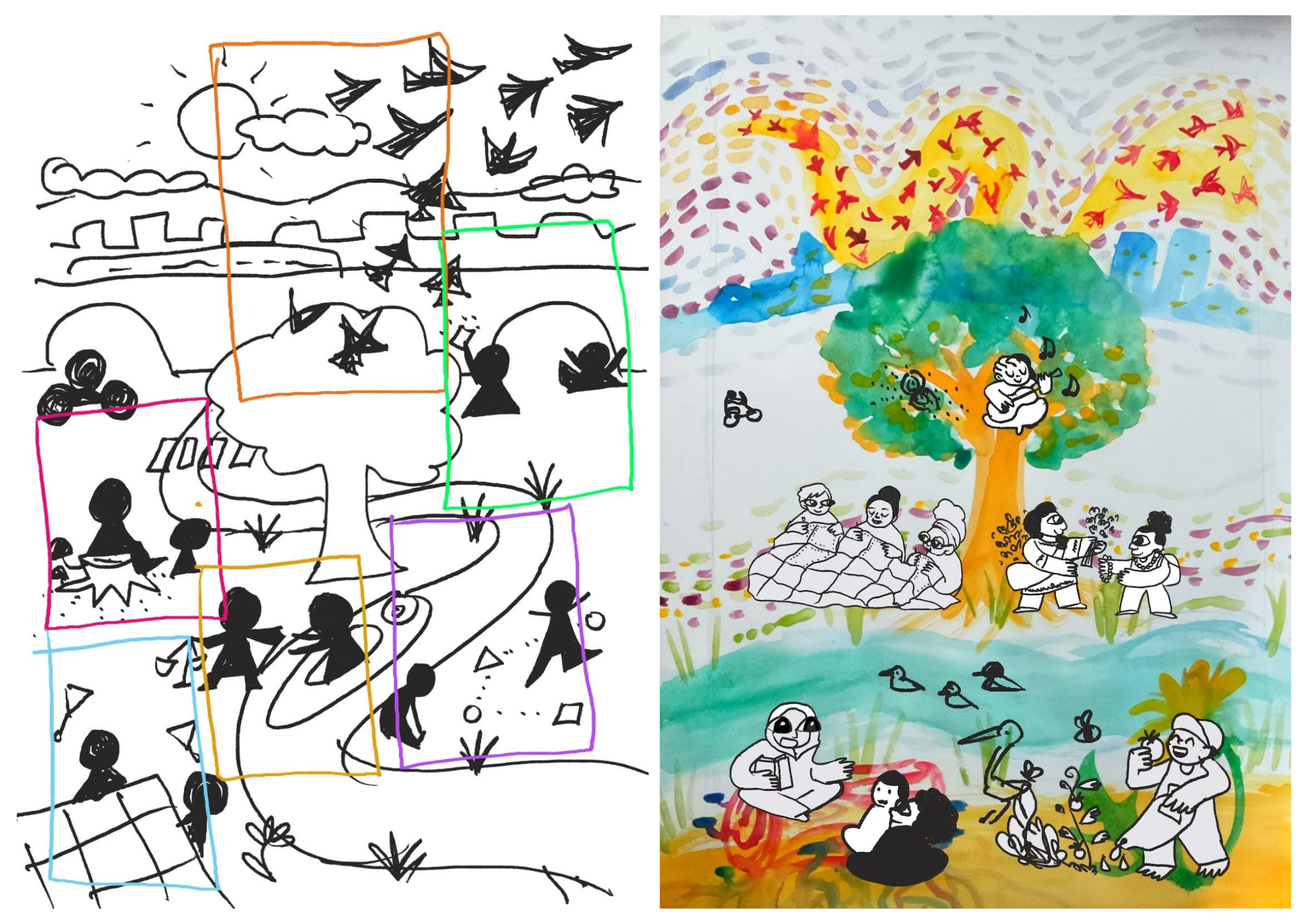
We thought about collaging the concepts together to make up a big picture, or using line art for cleanness amidst complexity. But in the end we felt drawn to using watercolour and ink, so that the finished work felt more textured and human.
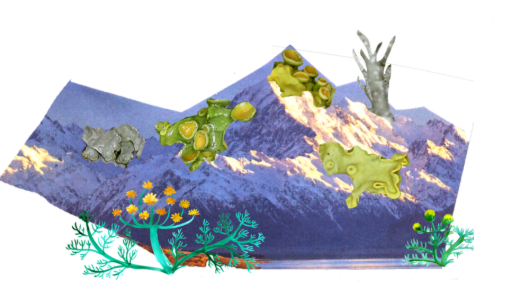
I was illustrating by hand, first in pencil, then ink. I created the main scene with the tree first, then each character as an individual element. I then scanned in each element so I could organise them onto the scene digitally and make any last minute edits.
Charlotte’s stories behind the illustrations
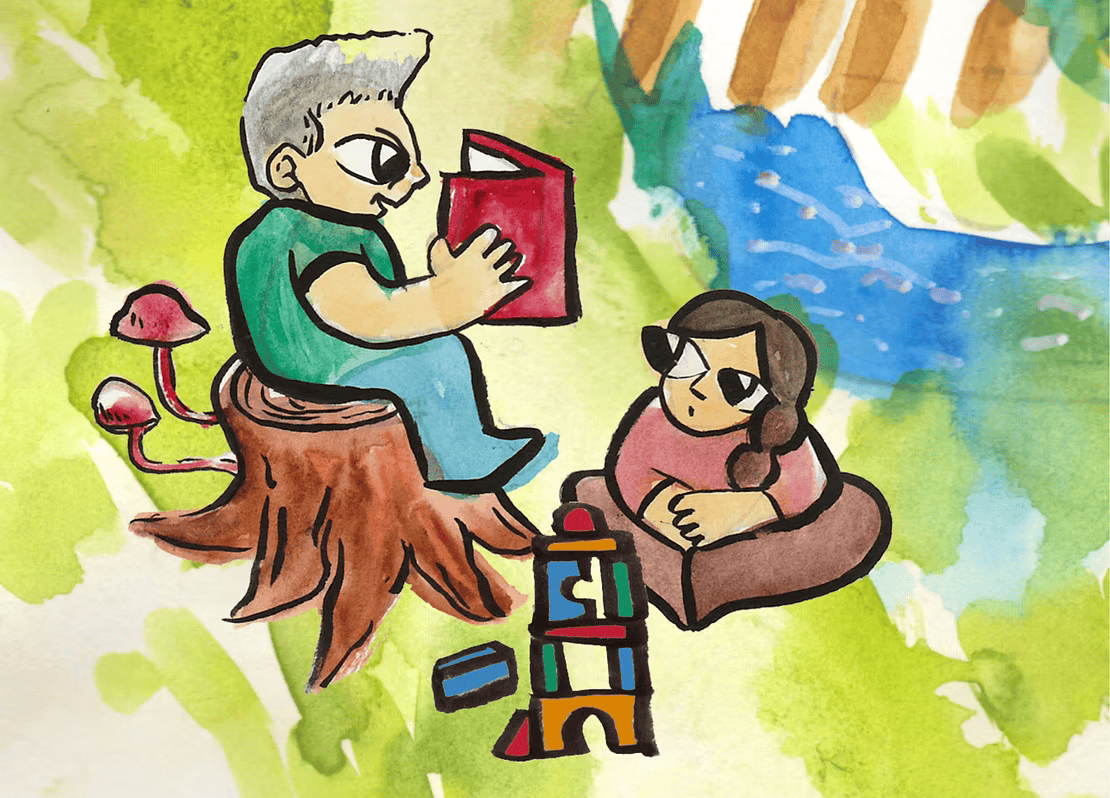
In a story commons, we explore what was, what is and what could be
I asked my Dad how he felt about the England flags being put up outside his house. “We’ve been here before,” he said, without hesitation. “Look at us now.” There is precedent for how we face the challenges on our doorsteps, and we can build on what’s worked before, but only if we know the stories.
The news erases this context, which makes each crisis feel insurmountable. But even though our struggles, and the solutions, are different now compared to the past, they are also interconnected, like mycelium networks branching, connecting, and decomposing what is no longer useful for the realities we find ourselves in.
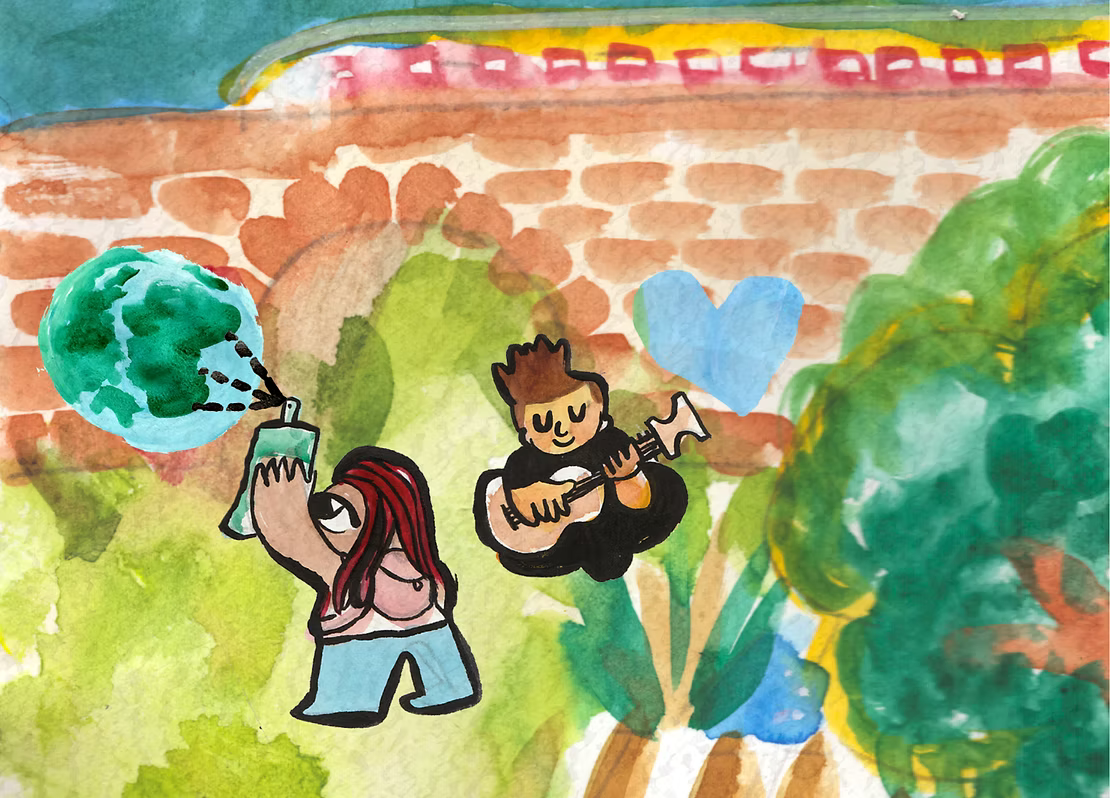
In a story commons, we inspire creativity
I’ve watched funding for arts and culture systematically slashed in the UK for years. This way of valuing culture work is reflected in families that have relegated it to a hobby rather than a serious career path that can shape our realities where we stand. This illustration centres around creatives in the city freely reshaping the built environment, reminding us to act with consideration for the earth. This lesson empowers the storyteller to embrace the responsibility of inspiring others to share their own stories.
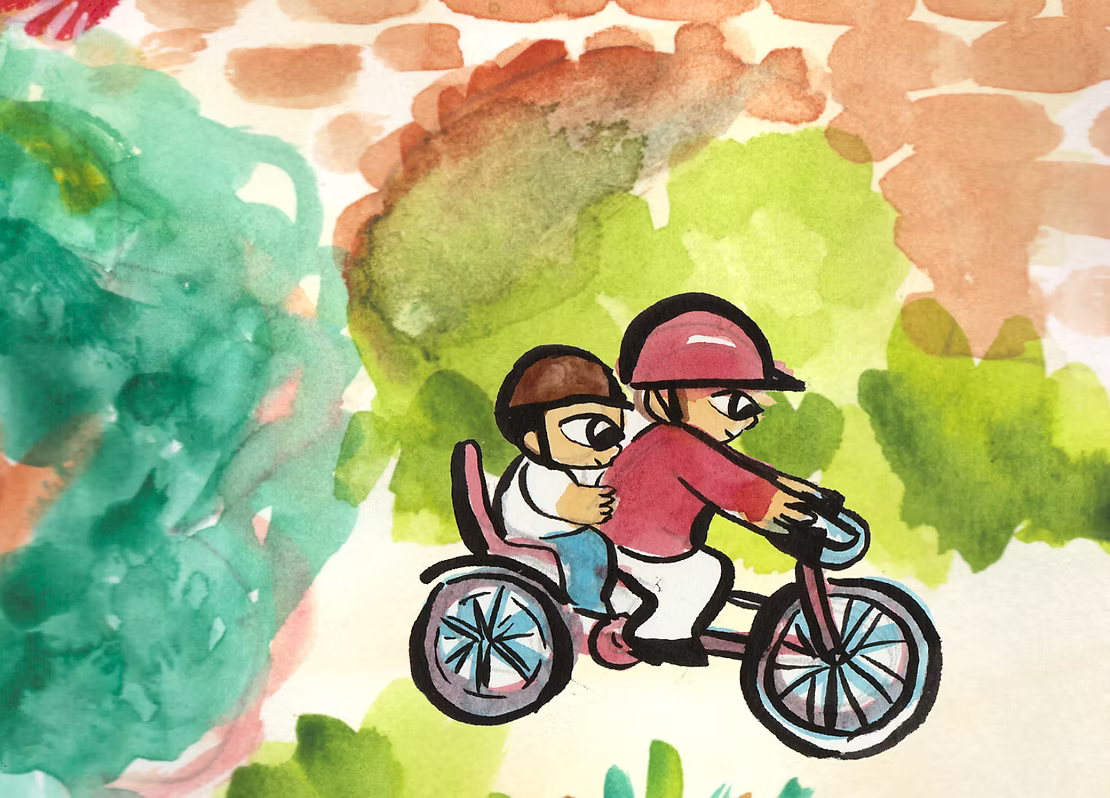
In a story commons, we reimagine accountability and care
Farzana Khan says that how we act now is how we will act when increasing pressures are put on us. Inspired by starling formations in flight, adrienne maree brown’s’ Emergent Strategy advocates responding to crises, by making proximity to our neighbours and peers, with light check-ins, little and often, an everyday practice. The starlings metaphor has informed this illustration, as well as a parental character moving through the space with a child as a symbol of care and responsibility to the collective and to generations to come.
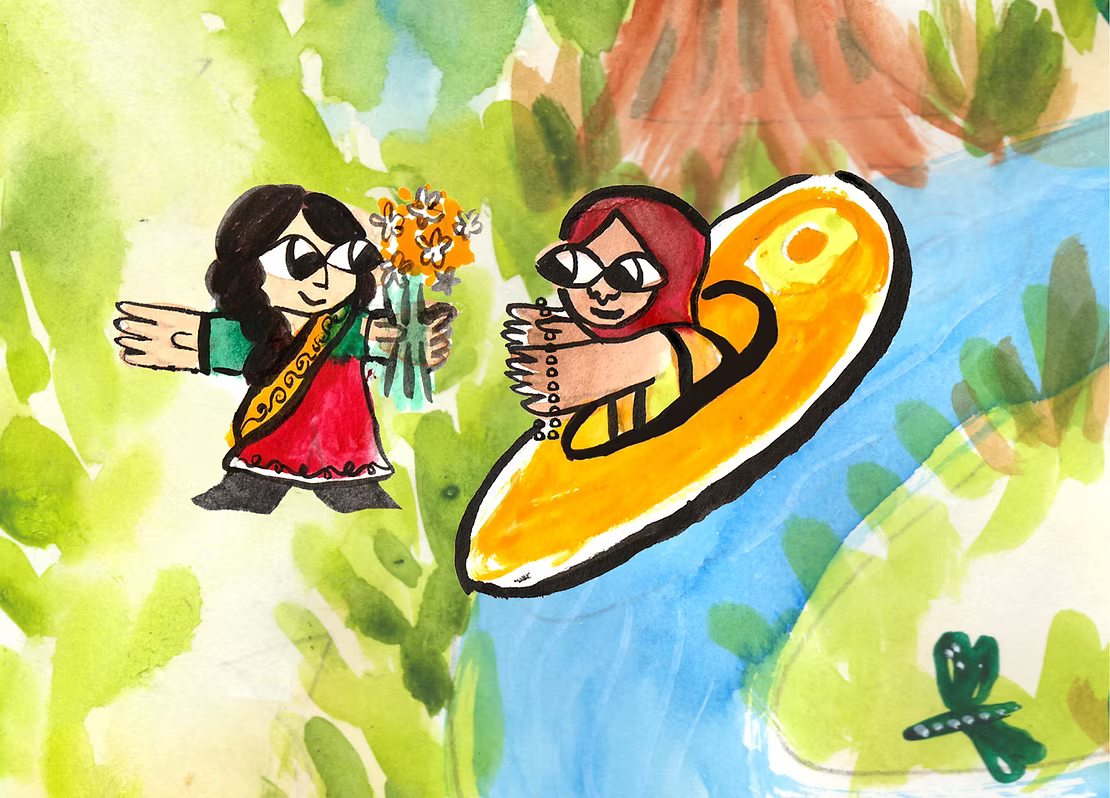
In a story commons, we envision new economies
“Economics is about how we live together (it literally means ‘household management’) – and it involves all of us.” The illustration we settled on for this Story Commons lesson card focuses on how we value things, told through the exchange of everyday materials. Economics in this image is portrayed as part of life, not ‘a separate arena that only economists can understand’, with a reference to ’Doughnut Economics’ as a compass and metric that centres social justice and ecological safety, locally and globally.
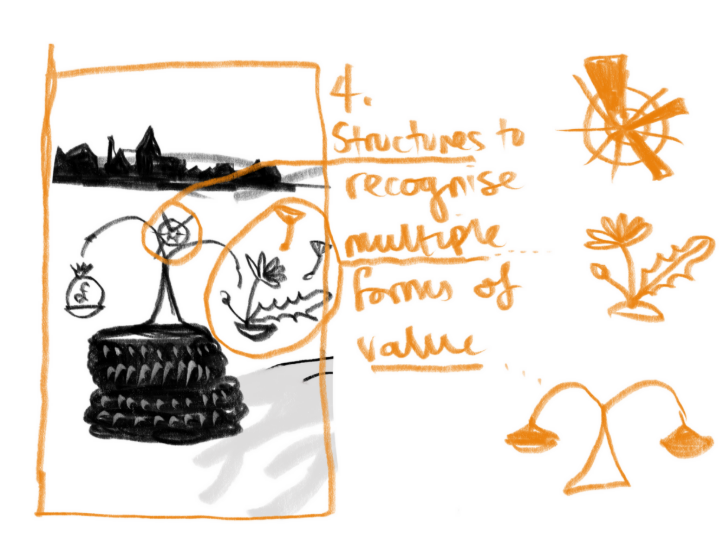
An early draft of the illustration for ‘In a story commons, we envision new economies’. We decided to move from a more abstract depiction of ‘value exchange’ towards something involving people and the living world.
In a story commons, we collaborate to regenerate
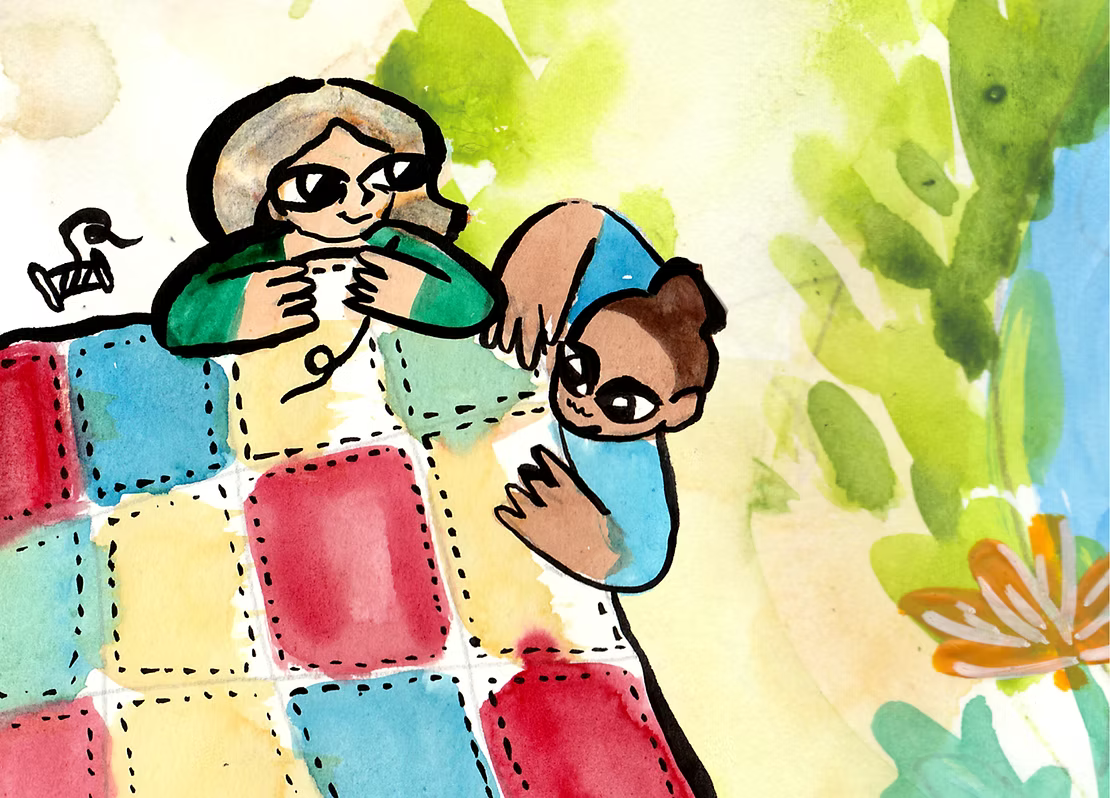
Quilting has long been used in activism for the purpose of storytelling and social change. In practice, individuals often focus on one patch of material, and then come together to stitch up many different stories to make up the bigger picture. We chose the quilt as a symbol for how stories ‘create and maintain the bonds between us’, both in content and in the way we craft them.
In a story commons, the process is the purpose
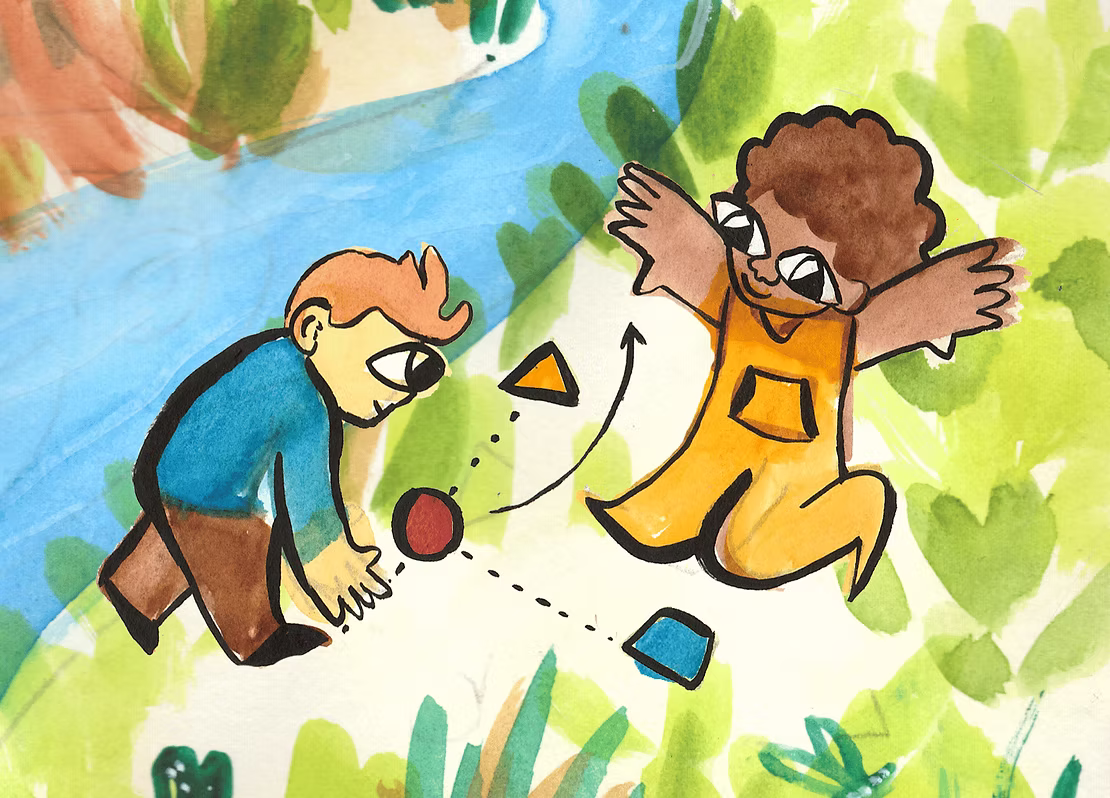
Games bring people together to take action towards a common goal, sometimes in opposition and sometimes co-operatively. The process of playing a game is its purpose, and it generates intangible benefits, like meaningful connection and joy. Similarly, the process of storytelling can either bring people together and make our lives better, or drive people apart and make our lives worse. Stories that are valued via products, clicks or shares allocate value to something based on partial, incomplete information – we cannot account for the ripple effect of stories in the complex entanglements that impact our social and ecological realities.
Resources
I invite you to use this as a guide to iterate on what’s been made. Here’s a toolkit of what we used:
This piece is part of a series, Lessons for a Story Commons. Aside from the introduction, How storytelling can open the door to thriving futures, the series can be read in any order: